
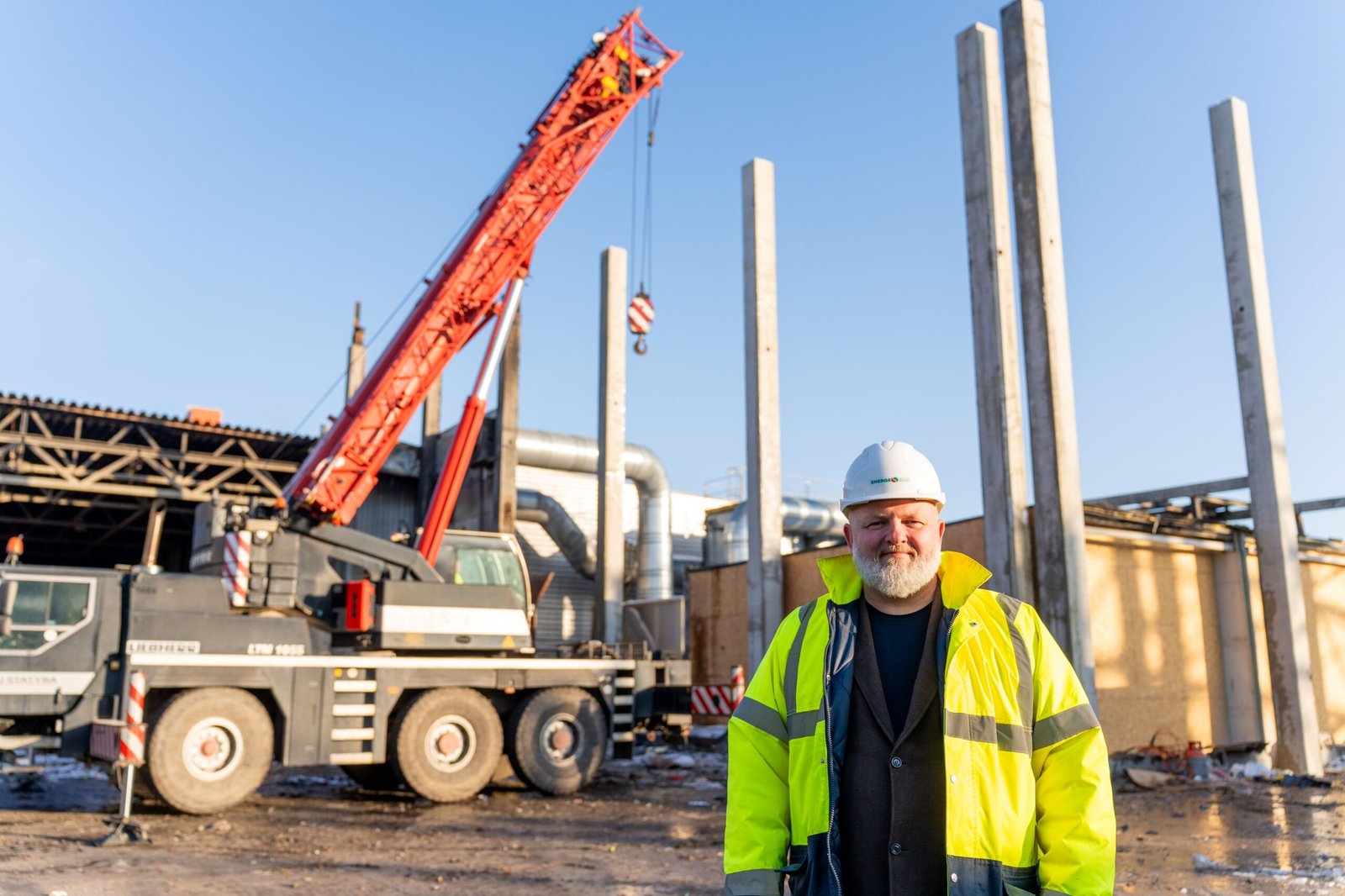
Reconstruction of the Vilnius mixed-waste sorting facility can continue only after VAATC takes over the work already completed and the construction materials purchased by Energesman and pays for them. To date, all completed reconstruction work and construction materials remain on Energesman’s balance sheet. Approximately 65% of the construction work, worth EUR 1.5 million, has already been completed.
VAATC has not taken over the completed work
“We have completed most of the building reconstruction work, and it remains our property: neither the completed work nor the materials have been transferred to VAATC. VAATC itself refused to accept the work in stages and wanted to take it over only after all construction work had been completed. The reconstruction can therefore continue only after the work already completed is formally taken over from us and payment is made for both the work and the construction materials purchased,” says Algirdas Blazgys, CEO of Energesman.
The work completed to date includes post-fire structural assessments, demolition and dismantling, design and sandblasting, as well as a substantial part of the construction work. The load-bearing columns and steel roof beams have already been installed. Custom-made insulated sandwich wall panels and profiled roof sheeting have also been delivered to the facility.
The work and materials have cost Energesman EUR 1.5 million, including VAT. Energesman has approached VAATC with a proposal to resolve the situation.
Work and materials offered at cost
“We are prepared to transfer the completed work and construction materials to VAATC at cost so that the reconstruction of the facility can continue,” says Mr Blazgys.
Due to inflation, higher energy prices and supply disruptions, the same construction materials and work now cost up to 30% more than when Energesman purchased and commissioned them last year.
According to the work acceptance certificates signed by Energesman and the main contractor, Telšių statyba, 65% of the construction work has already been completed.
The main remaining tasks include installing the roof and wall cladding and completing the building’s engineering systems.
The assets would be transferred free of charge if the agreements were honoured
Under the Settlement Agreement signed by VAATC and Energesman in the spring and approved by the court, the facility operator undertook to reconstruct the building at its own expense and transfer it into VAATC’s ownership, provided that VAATC fulfilled its obligations.
“We would transfer the completed work and materials to VAATC free of charge only if the operating and modernisation agreements were honoured. VAATC currently considers these agreements terminated and therefore cannot expect us to hand over our completed investments without compensation,” says Mr Blazgys.
If VAATC continues reconstructing the building without formally taking over and paying for the work and materials, Energesman will take legal action.
“That would amount to outright misappropriation by a company controlled by Vilnius City Municipality. We hope it will not come to that,” Mr Blazgys emphasises.
Payments would be refunded if the court overturns the termination
If the court ultimately rules that VAATC unlawfully terminated the operating and modernisation agreements and Energesman is reinstated to operate and modernise the facility, restitution would apply and Energesman would refund the amounts paid by VAATC for the building.
This would restore the position of both parties as envisaged in the Settlement Agreement between VAATC and Energesman.
Waste is currently being handled by Ecoservice and Ekobazė, companies contracted by VAATC, and the cost of waste management has doubled. It is difficult to assess the exact expenditure because VAATC does not disclose all public procurement procedures or the contracts it concludes. For example, Fcomm provides public relations services to VAATC, but the contract has not been published.
“This lack of transparency raises concerns that the total cost of waste management and related additional services will be even higher. Money collected from residents and intended for the Kazokiškės landfill is being wasted in this way,” emphasises attorney Dr Paulius Miliauskas, a partner at the law firm Miliauskas ir Lauraitytė.
Energesman has already initiated five legal proceedings against VAATC and Vilnius City Municipality and has also contacted the Prosecutor’s Office.
According to preliminary estimates, Energesman’s losses will amount to approximately EUR 20 million. The losses may continue to increase the longer the facility remains under VAATC’s control.