
The waste crisis in Vilnius has not ended – it has only begun and could continue for another two, three or even five years. This is how long legal disputes in court may take and how long it may take until the waste sorting plant is rebuilt. Vilnius risks becoming dependent on several waste management companies that would both collect and sort waste, further reducing competition in the waste management sector.
The crisis will continue until a new plant is operational
As disputes over both the operation of the plant and the termination of modernisation agreements will be resolved in court, VAATC will face difficulties launching a new public procurement process for the plant’s reconstruction until these disputes are concluded. Questions may also arise regarding the legality of a new procurement process for selecting a plant operator.
“Court proceedings at all instances can take up to five years. If the case is lost, compensation for damages and lost income for the entire period would have to be paid – we are talking about tens of millions of euros,” says attorney Dr Paulius Miliauskas, partner at the law firm “Miliauskas ir Lauraitytė”.
The reconstruction of the plant building would also become VAATC’s responsibility – the organisation would have to arrange and finance the completion of these works itself. This would require launching another public procurement process, which would take additional time.
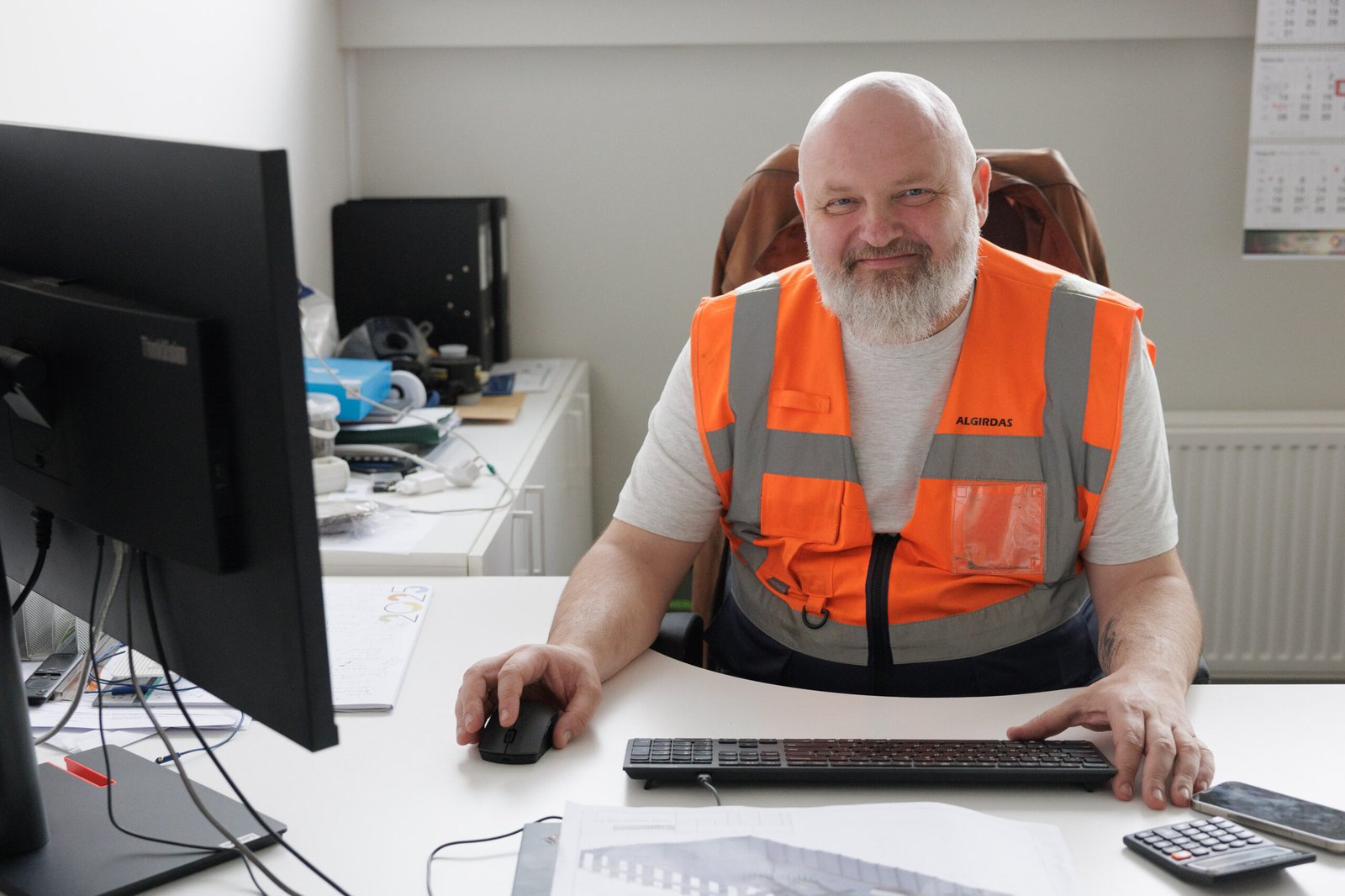
“For the entire period – which could mean several years – waste would mainly be managed using mobile equipment. This would mean less recovery of recyclable materials and higher volumes of waste sent for incineration and to landfill. Therefore, the waste crisis would continue throughout this period,” says Algirdas Blazgys, CEO of Energesman.
It is also important to note that VAATC has no practical experience in operating such a plant.
“VAATC has historically been an organisation focused mainly on administrative processes. Operating a waste sorting plant is not as simple as it may appear at first glance. Mixed waste is contaminated, which means equipment frequently breaks down. VAATC itself operates the Kazokiškės landfill – we can all see how challenging this has been, with repeated violations being recorded and residents suffering the consequences,” emphasises A. Blazgys.
Competition will decline
If waste management is transferred to Ekonovus, Ecoservice and Ekobazė, Vilnius will become fully dependent on these several companies. Together with Energesman, these were the four largest waste management companies operating in the Vilnius region.
Until now, these companies collected waste from residents and transported it to sorting facilities, as well as sorted separately collected plastic, paper, glass and metal waste.
“Market concentration will increase further, while competition will decline – Vilnius will have no alternative options if disputes arise with these companies. When competition disappears, companies can increase prices without restrictions and dictate their own conditions, because there is simply no alternative,” emphasises P. Miliauskas.
EU funding will be lost
If VAATC takes over the operation of the waste sorting plant, Vilnius will not be able to use European Union funding, as EU financing can only be allocated to waste management facilities that have legally selected private operators.
Without a private operator, EU funding would also not be available for modernising Zone A of the plant (food and kitchen waste treatment), which will cost EUR 3.6 million and which VAATC had committed to modernising directly.
In addition, EUR 7.5 million in EU funding already allocated to Energesman for textile and plastic recycling could be lost.
Preliminary estimates show that the disruption caused by VAATC could cost residents of the Vilnius region more than EUR 50 million due to increased waste management and incineration costs, plant reconstruction expenses and reduced competition. If legal disputes continue for a long time, the amount could increase even further.