
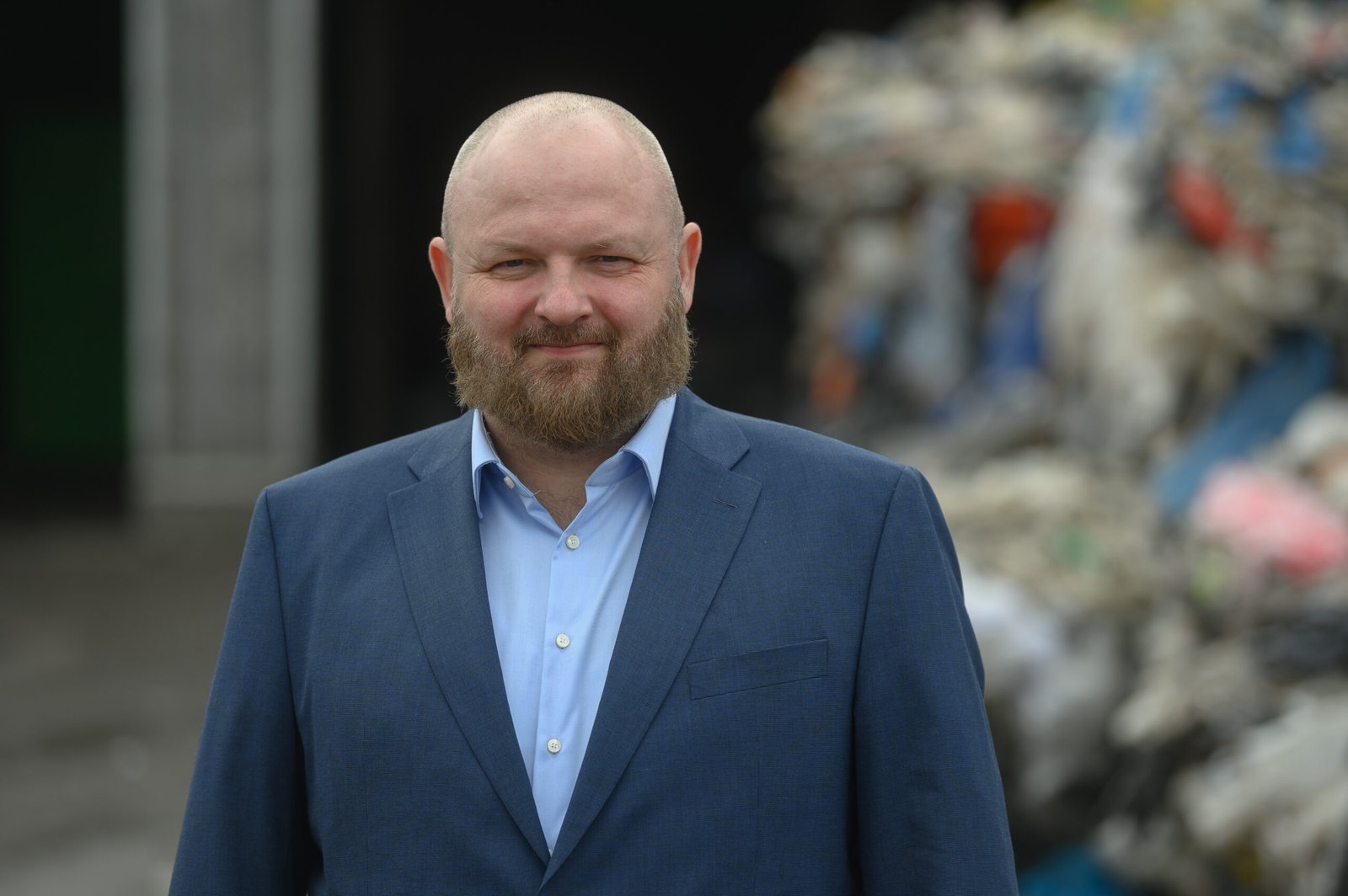
During a podcast with Algis Ramanauskas on Thursday, Vilnius Mayor Valdas Benkunskas resorted to “dirty tactics” by claiming that the operator of the Vilnius waste treatment plant, Energesman, had allegedly “deliberately started withdrawing money from the company” in spring. The operator stresses that such statements do not reflect reality. This can easily be verified by law enforcement authorities by examining the company’s bank statements.
Spreading unfounded conspiracy theories
“The mayor has sunk very low – to the level of Eastern propaganda methods, using dirty tactics and spreading conspiracy theories. His statements are defamatory. This is extremely inappropriate for a politician of such a high rank and appears desperate,” says Algirdas Blazgys, CEO of Energesman.
After the fire, Energesman continued managing waste at the damaged plant. As a result, operating costs increased significantly due to the need to rent additional equipment, comply with instructions from the Vilnius City Municipality’s Emergency Operations Centre (ESOC), and restore the plant building.
The company’s annual financial report shows that Energesman recorded a loss of EUR 0.56 million last year.
“What money could you possibly ‘take out’ of a company operating at a loss? Nothing. We were putting money into the company to pay employee salaries, electricity bills, and fuel costs for loaders. After the fire, we financed regional waste management from our own funds to ensure that operations did not stop,” says A. Blazgys.
Municipality covered 0.4% of costs – yet calls it significant support
Since the fire, the Vilnius City Municipality has provided EUR 15,980 to cover additional costs. The other seven municipalities in the region and VAATC provided not a single euro. The mayor of Vilnius has not visited the plant even once since the fire.
During the podcast, the mayor described this support as a major effort:
“After the fire, we really made significant efforts to help the same company get back on its feet. We provided a lot of assistance and signed agreements for the restoration.”
“The mayor’s support amounted to 0.4% of the increased costs – a drop in the ocean. We were left to cover all additional expenses ourselves because we received no support from VAATC or the municipalities,” says A. Blazgys.
However, he draws attention to another aspect of the mayor’s statements:
“The mayor speaks as if he personally, rather than VAATC, made all decisions regarding contracts – their signing and termination. This clearly undermines the principle of institutional independence. Is VAATC merely a tool controlled by the mayor for redistributing the waste management market?”
VAATC debt exceeds EUR 6 million
VAATC’s debt to Energesman currently amounts to EUR 6.12 million. This includes EUR 1.23 million unpaid for services provided in May and June, and EUR 0.49 million for services provided in July. An additional EUR 4.4 million is owed under the plant modernization agreement.
“VAATC is seriously failing to fulfil its obligations under both the operating and modernization agreements. Its debt to us continues to grow, as we are already calculating late payment interest,” says A. Blazgys.
Funds were needed for equipment and ESOC decisions
Throughout the period following the fire, Energesman rented additional mobile equipment because two stationary sorting lines had been destroyed. The company paid EUR 100,000 per month for this equipment rental. In total, EUR 1.4 million (including VAT) was spent on renting mobile equipment. These costs were covered solely by Energesman.
As the emergency situation continued for an extended period, Energesman requested that VAATC, as the plant owner, rent the necessary equipment itself and provide it for the operator’s use. However, VAATC rejected this request.
Energesman also incurred approximately EUR 1 million (including VAT) in additional costs while implementing various ESOC instructions, including transporting waste to other regions, using more expensive incineration facilities, and managing additional waste streams.
Another EUR 0.3 million (including VAT) invoice was issued to Energesman by VAATC itself for the storage of 14,000 tonnes of unsorted waste at the Kazokiškės landfill. The decision to transport waste to the landfill was also made by ESOC.
Energesman has already invested approximately EUR 1 million in restoring the building and purchasing construction materials. The company has also spent additional funds on initial orders for new sorting equipment to modernise the plant.
Meanwhile, VAATC has not provided Energesman with any payment deferrals or discounts that could have helped stabilise disrupted cash flows.