
Waste is being processed at the Vilnius Regional Mixed Municipal Waste Sorting Facility and is once again being supplied to the Vilnius Waste-to-Energy Plant for energy recovery. The total volume of waste currently stored at the site remains within the permitted limit of 24,000 tonnes. We continue to expect constructive cooperation from VAATC and other relevant institutions in resolving the waste management crisis in the Vilnius region.
Waste processing and energy recovery have resumed
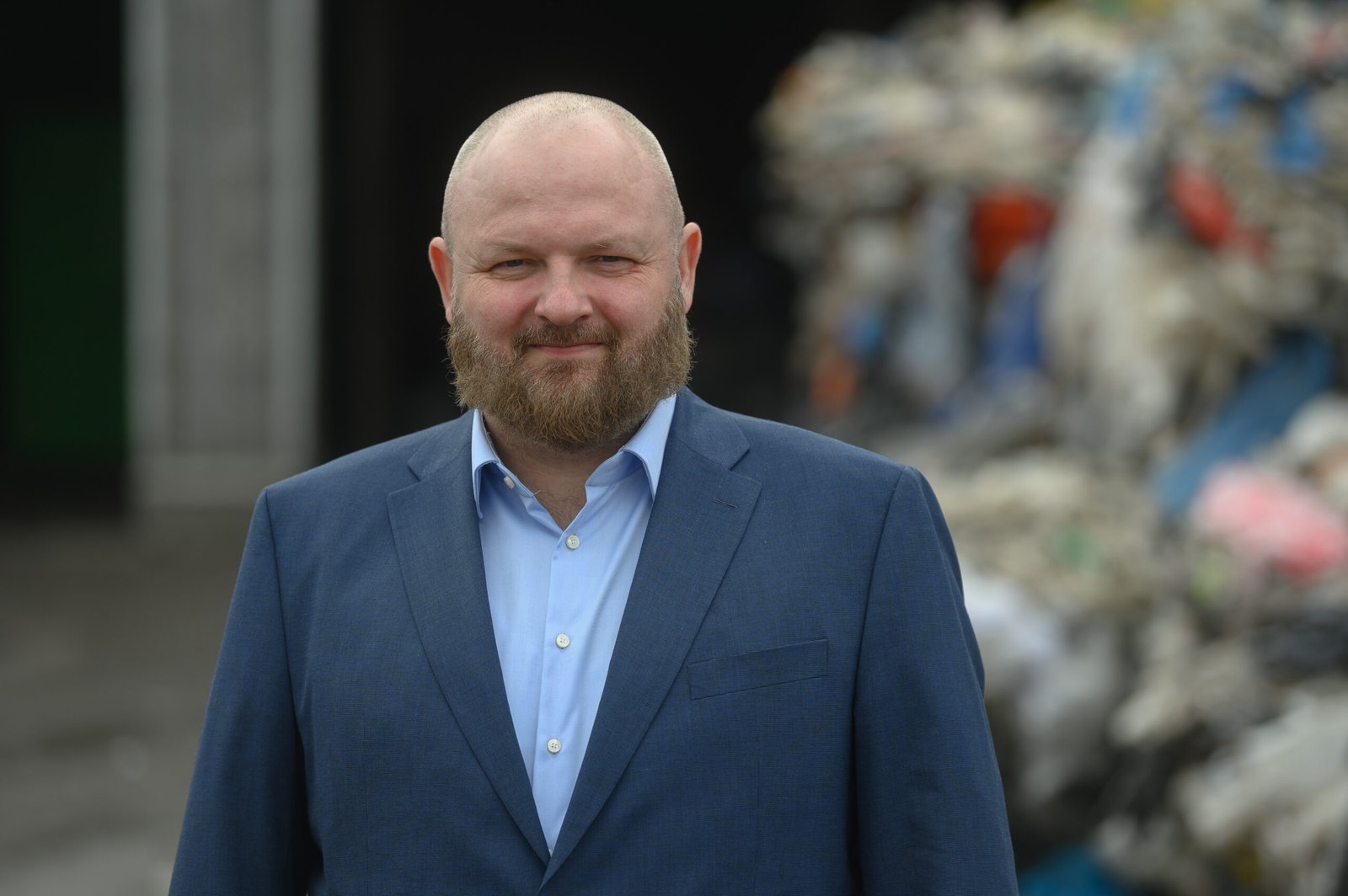
“We continue to process and accept waste in accordance with our operating agreement. Starting today, waste is also being transported to the Vilnius Waste-to-Energy Plant for energy recovery. We are making every effort to help resolve the current crisis,” says Algirdas Blazgys, CEO of Energesman.
The company also continues to expect a constructive and partnership-based approach from VAATC.
Total waste volume remains within permitted limits
Approximately 21,000 tonnes of waste are currently stored at the facility. This volume is fully compliant with the Integrated Pollution Prevention and Control (IPPC) permit, which allows a maximum of 24,000 tonnes of waste on site.
“The Environmental Protection Department identified an exceedance only within one specific waste category, meaning that we temporarily have a higher volume of one particular type of waste. However, the overall amount of waste stored at the facility remains fully within the limits set by our permit,” Blazgys explains.
Wherever there is waste, there is a fire risk
Public statements suggesting an increased fire risk are misleading.
“Wherever waste is stored, there is always a fire risk because waste is combustible. The Fire and Rescue Department would identify a fire risk even if there were only one tonne of waste at the facility,” Blazgys notes.
The Fire Research Centre concluded that the fire at the facility last spring was not caused by excessive waste volumes but by an external object that had been discarded next to the waste and subsequently ignited.
On 8 July, the Fire and Rescue Department carried out an unscheduled inspection of the facility. Inspectors identified two issues: the fire alarm system has not yet been reinstalled following the fire, and some waste piles were stored too close together. The company has until 13 August to address these issues.
“As everyone understands, we are operating from a facility that suffered a major fire, and reconstruction of the building is still underway. The fire alarm system will be installed immediately after the rebuilding works are completed. We will also continue transporting the accumulated waste for energy recovery. No other violations have been identified,” Blazgys says.
Last winter, VAATC, as the owner of the facility, planned to install five thermal imaging cameras at the site, and the relevant technical designs had already been prepared and approved.
“Unfortunately, those thermal imaging cameras have still not been installed. That decision, and the responsibility for it, lies with VAATC,” Blazgys adds.
The accumulated waste built up during July
The waste currently stored at the facility can be processed within a few weeks. Only around ten days’ worth of unsorted municipal waste has accumulated.
All remaining waste stored at the site has already been sorted, baled and prepared for energy recovery.
Every summer, larger volumes of waste temporarily accumulate because the Vilnius Waste-to-Energy Plant shuts down for scheduled maintenance, reducing its processing capacity. This year, the plant was out of operation for almost the entire period from 9 to 28 May.
“The amount of waste is not as large as it may appear. Many people underestimate how much mixed municipal waste is generated in the Vilnius region. And yes, waste has an odour—it always will, regardless of who manages it. This is mixed municipal waste containing everything that residents discard; it is not separately collected plastic or paper, which is naturally much cleaner,” Blazgys explains.
On average, the Vilnius region generates around 4,200 tonnes of mixed municipal waste every week. If placed in a single pile, this would create a waste mound approximately 20 metres wide, 140 metres long and 10 metres high—and a pile of this size is generated every single week.
“We still hope that we will be able to reach an understanding with VAATC and that it will choose a partnership-based approach to resolving the current situation,” Blazgys concludes.
The City of Vilnius owns 76.51% of VAATC’s shares, while the remaining shares are held by other municipalities of the Vilnius region.