
A new, modern mixed municipal waste sorting plant for the Vilnius region was planned to be completed in Vilnius by March 2027. The facility was designed to sort waste using 12 robots and other state-of-the-art automated equipment. It was set to become the most advanced waste sorting plant in the Baltic States and one of the most modern facilities of its kind in Europe.
By now, 90% of the equipment design has already been completed, with 10 international suppliers from Europe and the United States committed to manufacturing the required equipment.
A plant worth tens of millions of euros
A total of EUR 11.75 million was planned to be invested in new equipment for the plant, with an additional EUR 2 million allocated for the building. The new equipment was also eligible for EUR 4 million in allocated European Union funding.
The total value of the new sorting plant would have reached nearly EUR 15 million. The facility and its equipment would have belonged to VAATC, while VAATC’s own investment would have amounted to only around EUR 0.5 million.
“Energesman” has already invested EUR 0.5 million in the initial equipment orders. The company has also paid an additional EUR 1 million for the reconstruction of the plant building and construction materials.
Partners: We do not understand what is happening
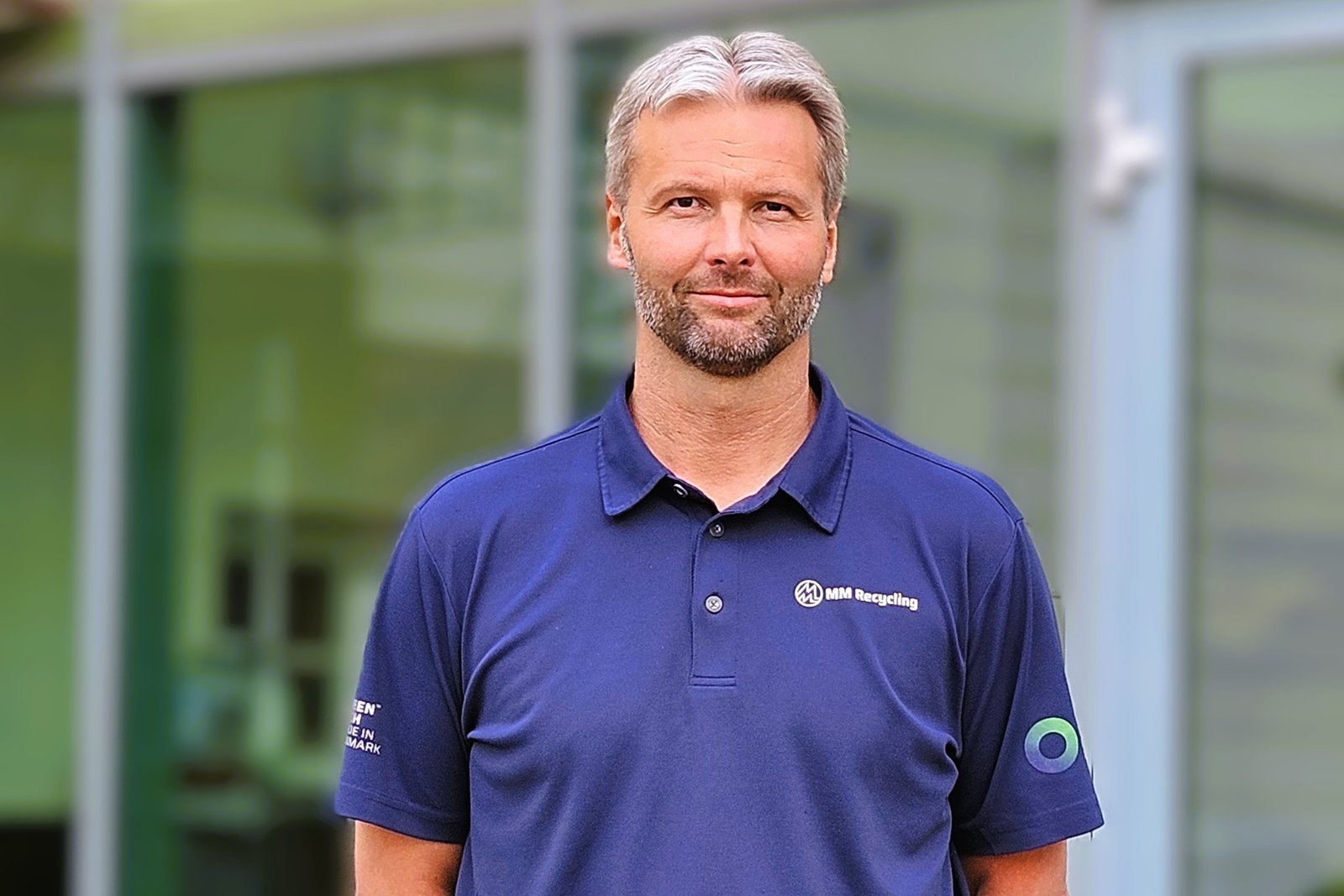
“The processes we are currently witnessing in Lithuania are concerning and do not create confidence. I cannot understand how a contract with a company that won an international public procurement procedure can be brought to a standstill so easily,” says Morten Christensen, Head of Danish company MM Recycling ApS.
The Danish company designed the configuration and layout of the new plant’s equipment to enable fully automated waste sorting – with human supervision only, without manual labour as was previously required.
“We are approximately 90% finished with the 3D design plan, which clearly defines the location and parameters of each piece of equipment. Only minor adjustments remain to be made, but the main work has already been completed,” says M. Christensen.
The planning process for the plant began already in autumn last year, when preparations started for participation in the public procurement procedure, allowing the required scope of equipment to be accurately assessed when preparing the bid.
Equipment already tested and AI trained
The manufacturing of the equipment has already been ordered from 10 international partners in the United States, Germany, the United Kingdom, France, Spain, Finland and Latvia.
“We have already paid advance payments to many of the equipment manufacturers. We have also conducted real-life tests with the selected equipment and actual waste brought to the plant to ensure that the solution works as intended,” says Algirdas Blazgys, CEO of “Energesman”.
The new sorting line was designed so that robotic arms would first remove the heaviest waste items and, at the final stage, the lightest ones. The robots would sort different types of plastics, separate paper, cardboard, glass and various metals.
“Even before the fire, together with the Lithuanian company ‘Softeta’, we developed an artificial intelligence-based programme that was trained to recognise different types of waste and count them – examples of how it worked can be seen on our website. We had planned to apply this already trained artificial intelligence solution in the new modern sorting line,” says A. Blazgys.
Designed to become one of the most advanced
“The Vilnius waste sorting plant was meant to become a flagship project in Europe. Once all the documents were finally signed, we were eagerly waiting for the equipment to be manufactured and installation work to begin,” says M. Christensen.
The sorting line was designed to process 230,000 tonnes of mixed municipal waste per year. Approximately 220,000 tonnes of such waste are generated annually in the Vilnius region.
The new line would have enabled the recovery of significantly more recyclable secondary raw materials than had previously been possible through manual sorting. These materials would have been much cleaner and easier to recycle.
“It would have reduced the amount of waste sent to landfill to a minimum and also decreased the need for waste incineration, as more materials could have been recycled. All this new equipment would have become the property of the residents of the Vilnius region through VAATC, which is and would have remained the owner of the plant,” notes A. Blazgys.
This would save residents’ money, because, for example, reducing the amount of waste going to landfill by 5% (11,000 tons) would save EUR 1.6 million, since the cost of disposing of one ton of waste in a landfill is EUR 147.85.
Contract signed, but client changed its decision
However, all processes related to the modernisation of the waste sorting plant had to be suspended after VAATC failed to transfer the EUR 4.4 million advance payment by 26 June, as required under the signed public procurement contract.
VAATC could have made the payments directly to the suppliers, but it did not do so either.
At VAATC’s request, “Energesman” signed tripartite agreements with all suppliers and submitted them to VAATC; however, VAATC never signed these agreements on its side.
VAATC announced the international public procurement procedure for the renewal of the waste sorting plant’s equipment in December last year (procurement ID: 5728395).
Three participants submitted bids. The lowest bid was submitted by “Energesman” – EUR 11.75 million. The second-ranked bidders were UAB “Motecha” and “Huttechnika sp. z o.o.” with an offer of EUR 15.55 million, while the third-ranked bidder was UAB “Azortum” with an offer of EUR 15.74 million.
Restarting the public procurement process for the equipment would result in a delay of at least one year. It would also mean that the already allocated European Union funding could no longer be used, while the overall cost of establishing the plant would increase.
“We have the greatest experience in Lithuania in sorting mixed municipal waste. For more than a year, we managed to handle waste even in the plant damaged by the fire. We invested millions of euros and countless hours into restoring a new, advanced facility – it is simply impossible to understand how one person, who entered the waste management sector only a month ago, can so easily destroy everything. This should not be happening – this is not normal,” says A. Blazgys.