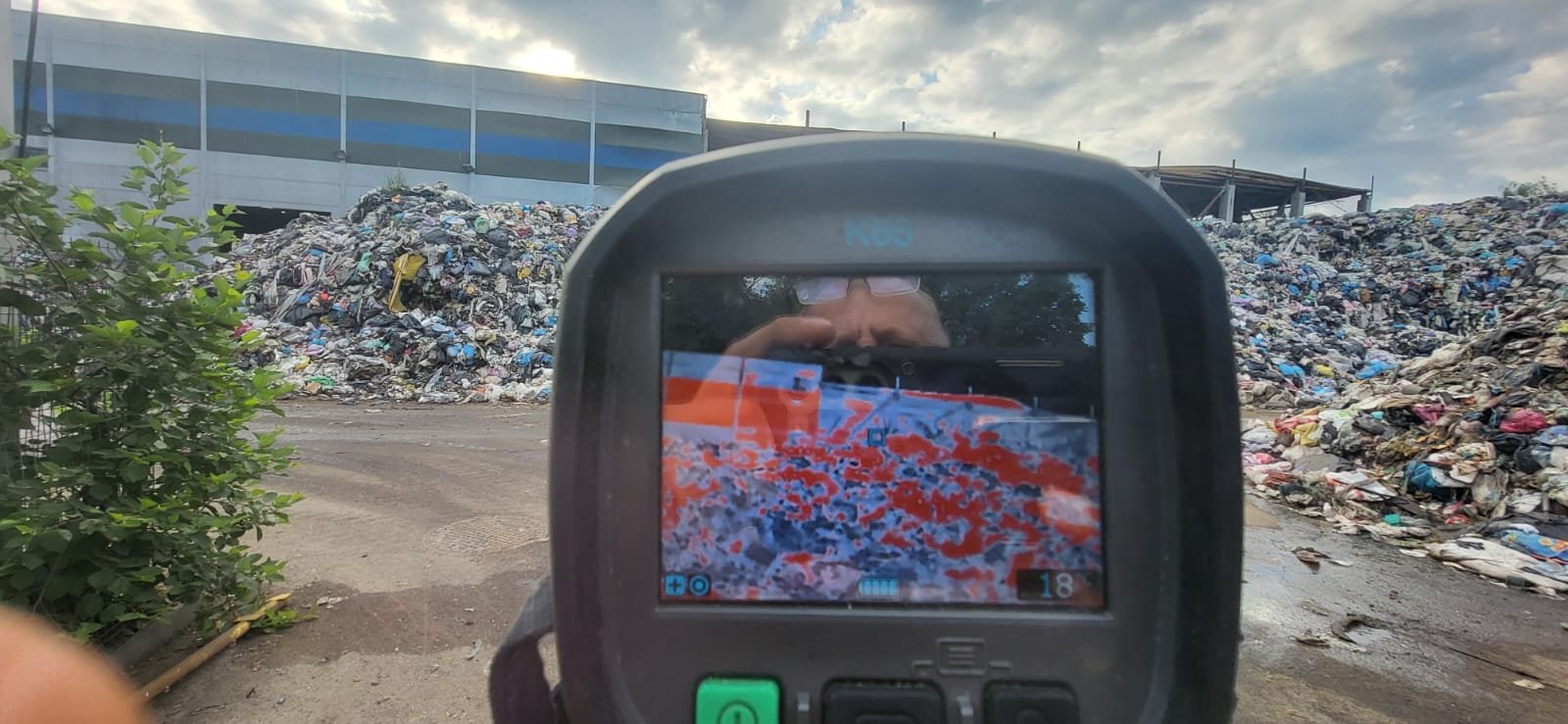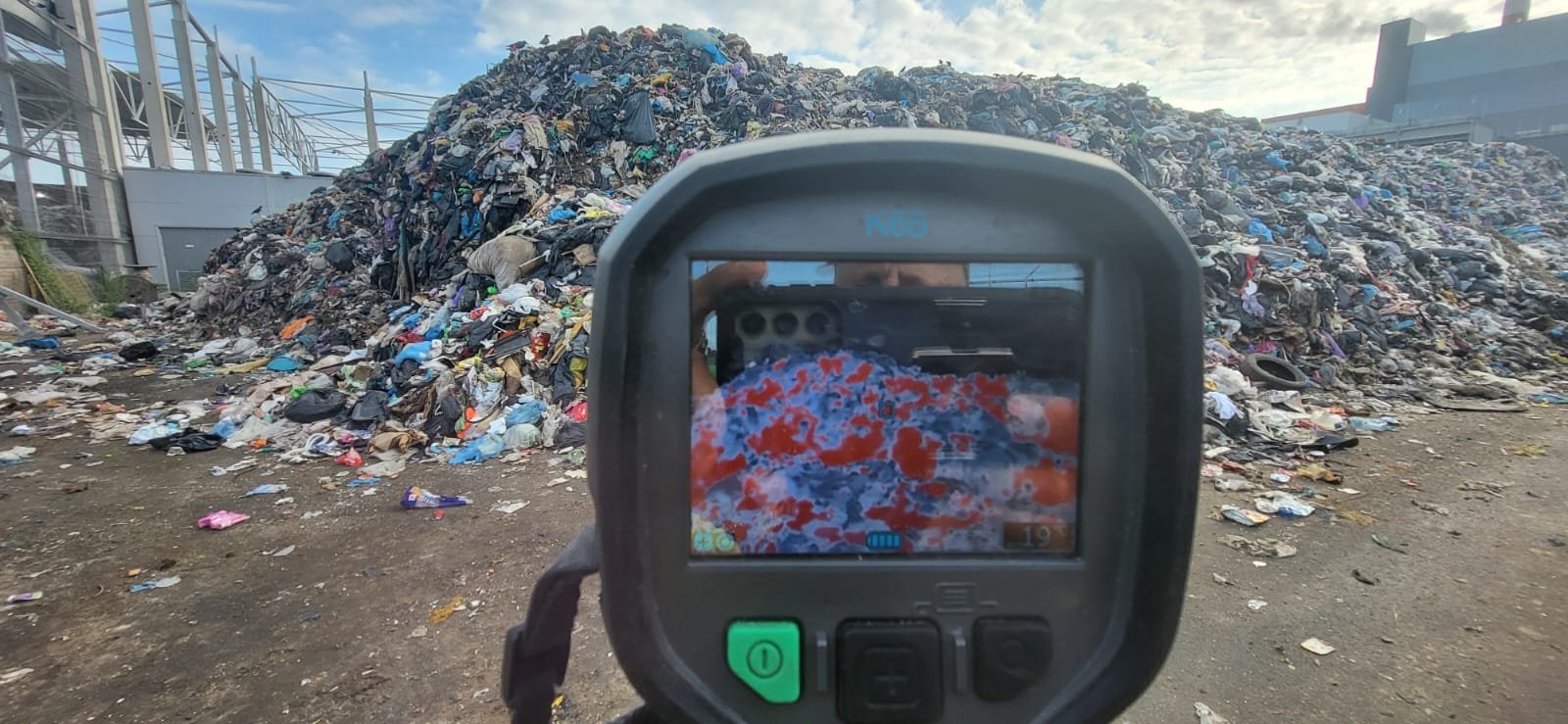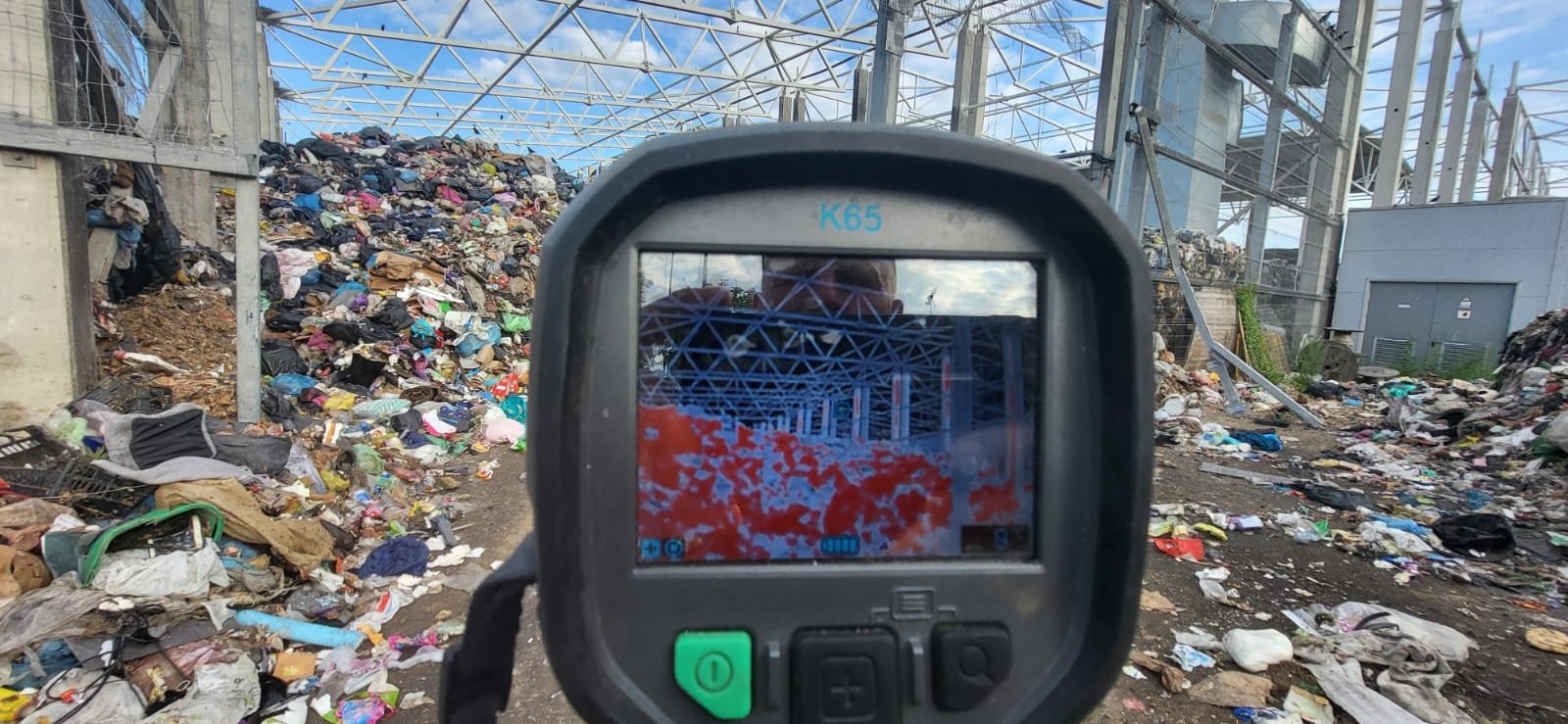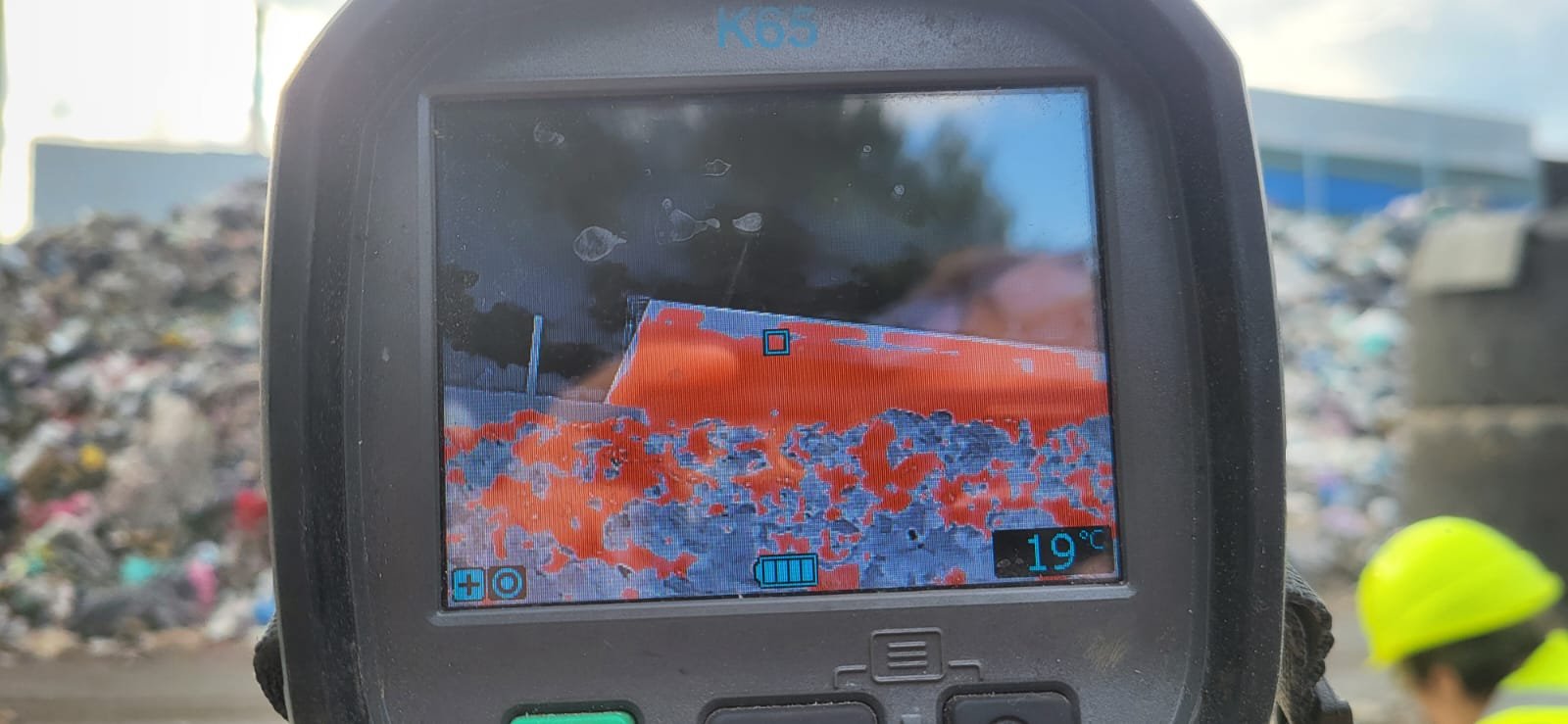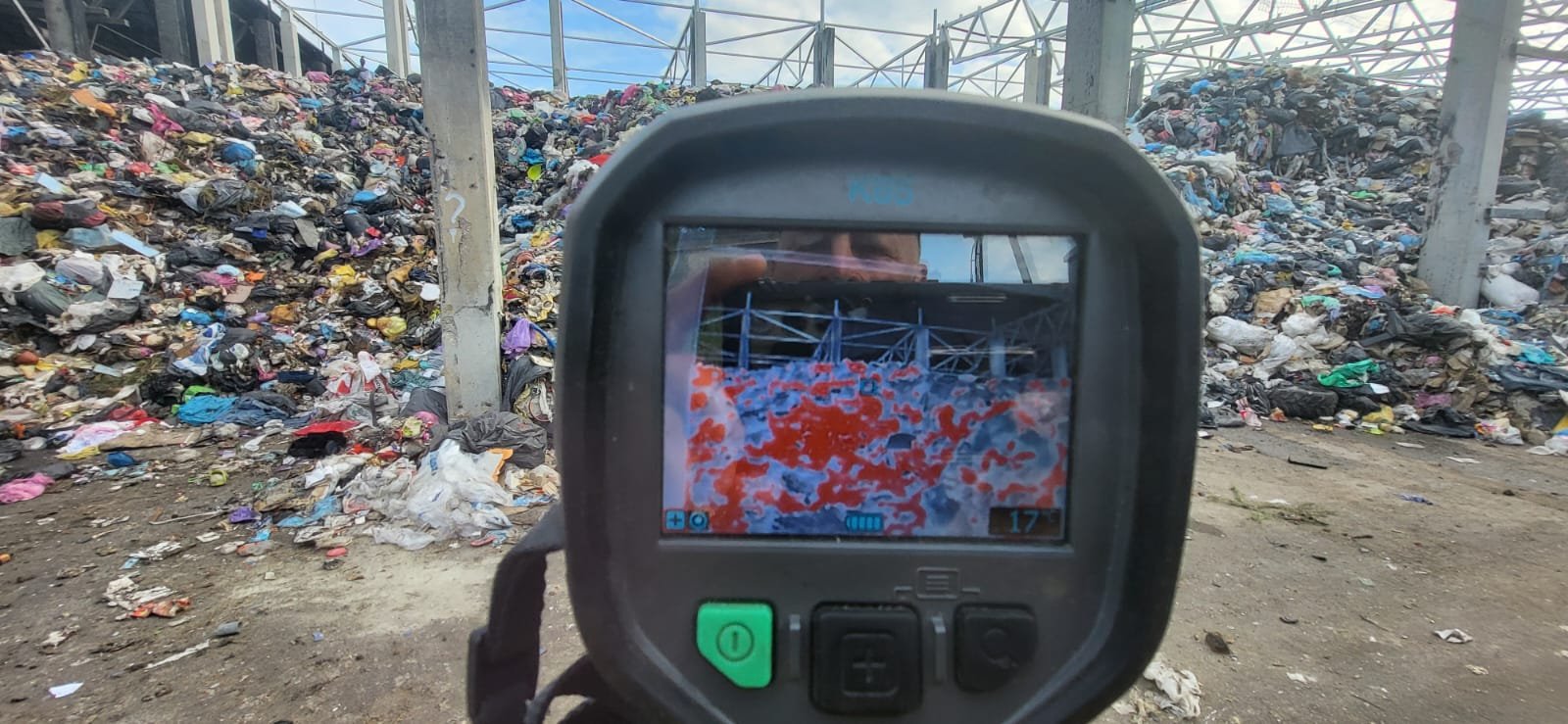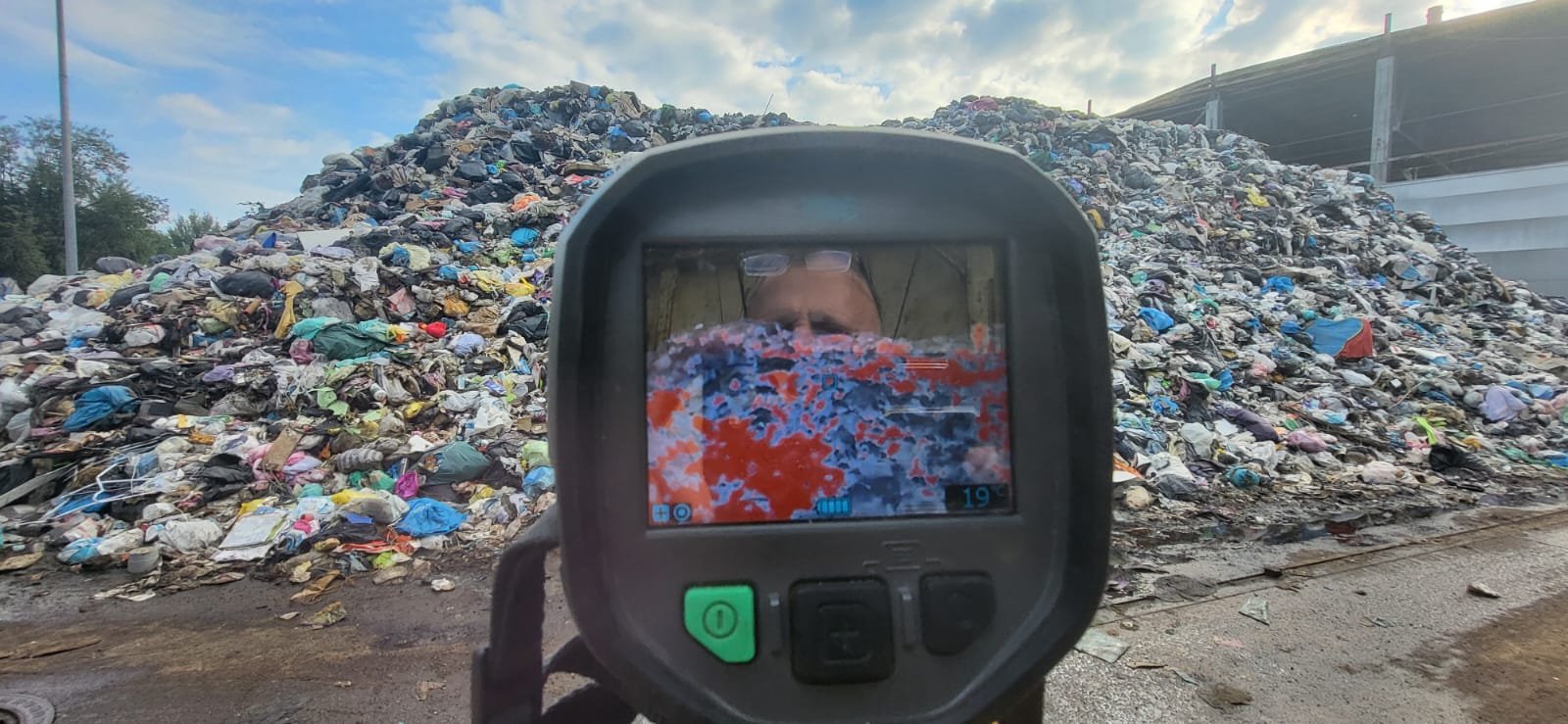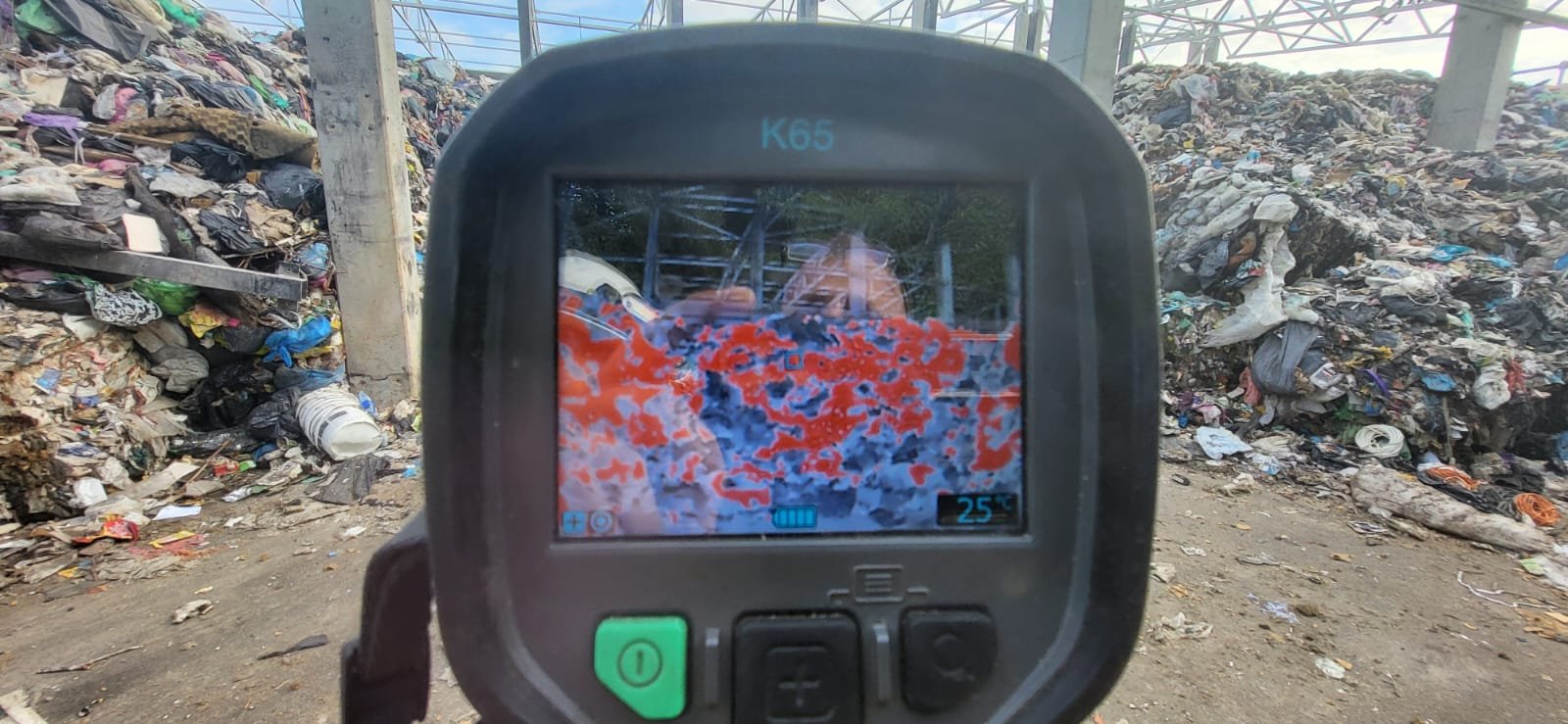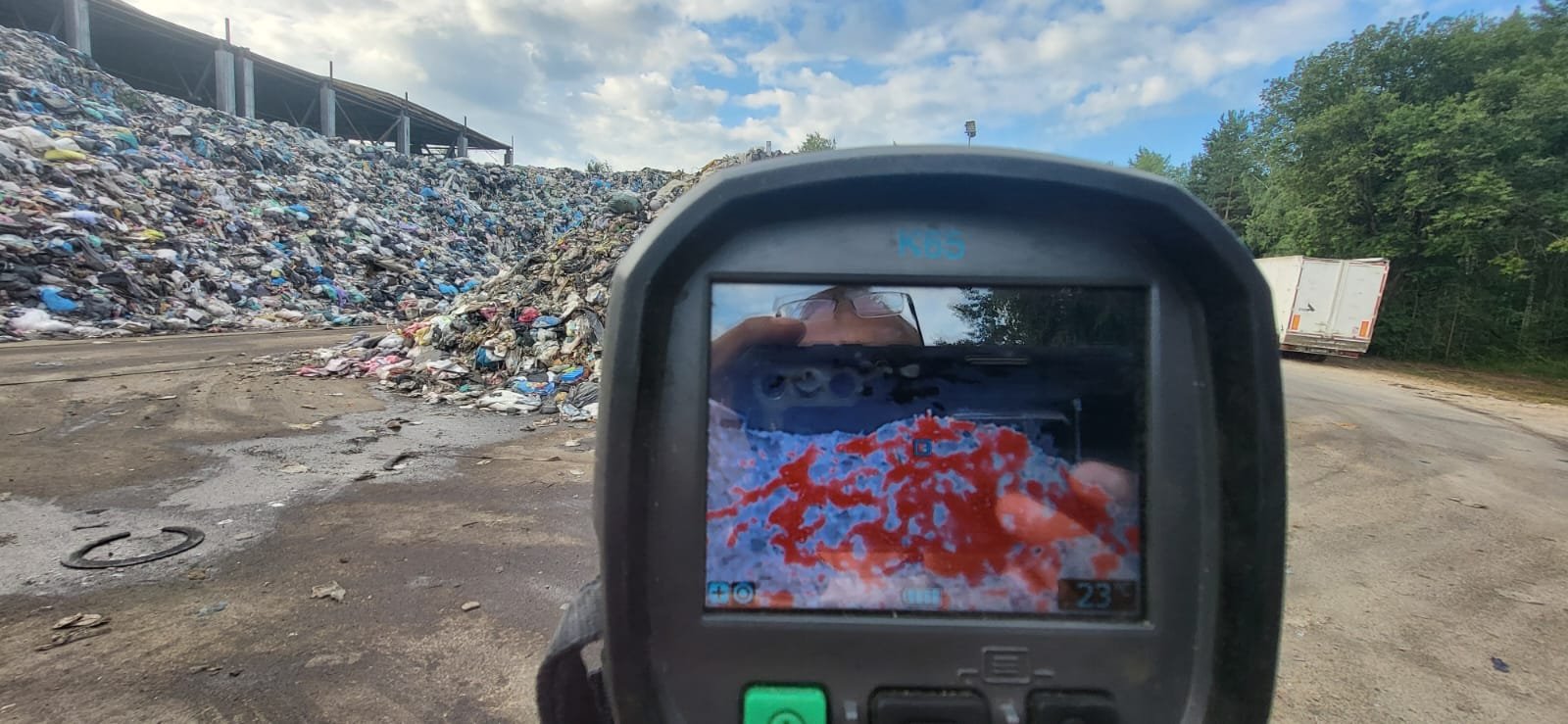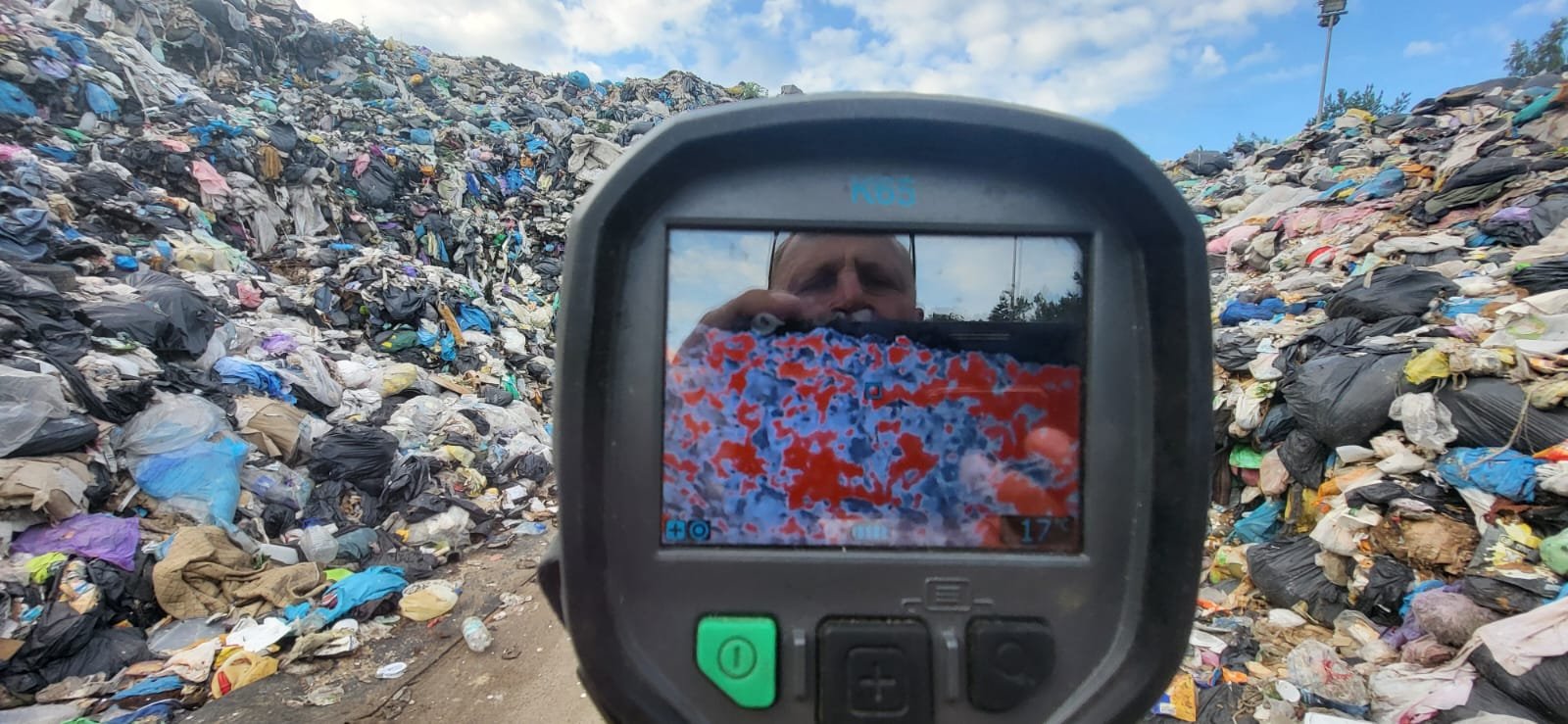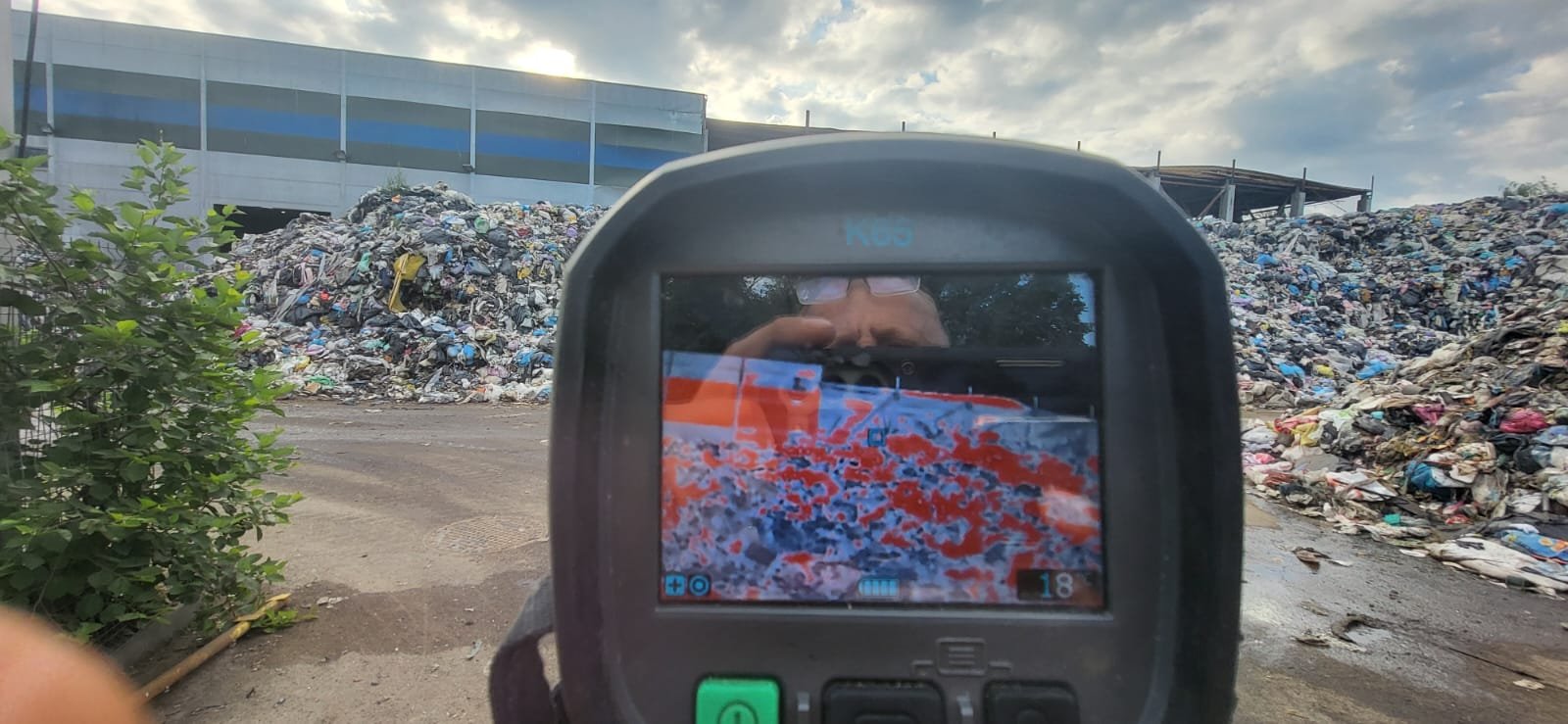
We have applied to the Vilnius Regional Court, requesting interim measures in response to the hasty and drastic actions taken by UAB VAATC. Together with firefighters stationed at the plant, we also measured the temperature of the waste piles using a professional firefighting thermal imaging camera. The highest recorded temperature was just 27°C – a level that cannot cause a fire.
No elevated temperatures detected
“We want to reassure the residents of Vilnius and the Mayor that the temperature of the waste piles is not elevated. The highest temperature recorded was only 27°C. We found no signs of heat build-up or hot spots. We continue to monitor the situation responsibly, and the waste is already being sorted and sent for energy recovery,” says Algirdas Blazgys, CEO of Energesman.
Together with firefighters stationed at the plant, company employees inspected the site yesterday and today, using a professional thermal imaging camera to examine the surface of the waste piles. The highest temperature recorded was approximately 27°C, while in most locations it was even lower.
These measurements do not support the impression being created in the public domain that there is an imminent fire risk. Heat build-up is generally considered to begin at around 70°C.
Invitation to share measurements
“We invite the Vilnius City Municipality, which has shared thermal images captured by drone, to also disclose the temperatures recorded in those images. It is important for both the public and the court to have an accurate understanding of the actual situation. It cannot be ruled out that the Mayor has been provided with incomplete information, creating the misleading impression that the risk of fire is directly linked to heat build-up in the waste piles, even though the measurements carried out do not support such a conclusion,” says attorney-at-law Dr Paulius Miliauskas, partner at the law firm Miliauskas ir Lauraitytė.
Already this winter, VAATC, as the owner of the sorting plant, planned to install five fixed thermal imaging cameras on the plant’s premises. The installation project had been prepared and coordinated with the plant operator.
“Unfortunately, VAATC never installed the thermal imaging cameras. They would certainly be useful now – we would have continuous, objective temperature monitoring of the waste and everyone could feel more reassured,” says A. Blazgys.
Awaiting the Court’s decision
Real-time temperature data from thermal imaging cameras would also be valuable for the court, which will have to assess the current situation.
Energesman’s application for interim measures has already been registered with the Vilnius Regional Court. The company is seeking to suspend VAATC’s hasty actions aimed at unilaterally terminating all agreements concluded with Energesman.
“We expect the court to decide on the application for interim measures next week,” says the attorney.
Invoices remain unpaid
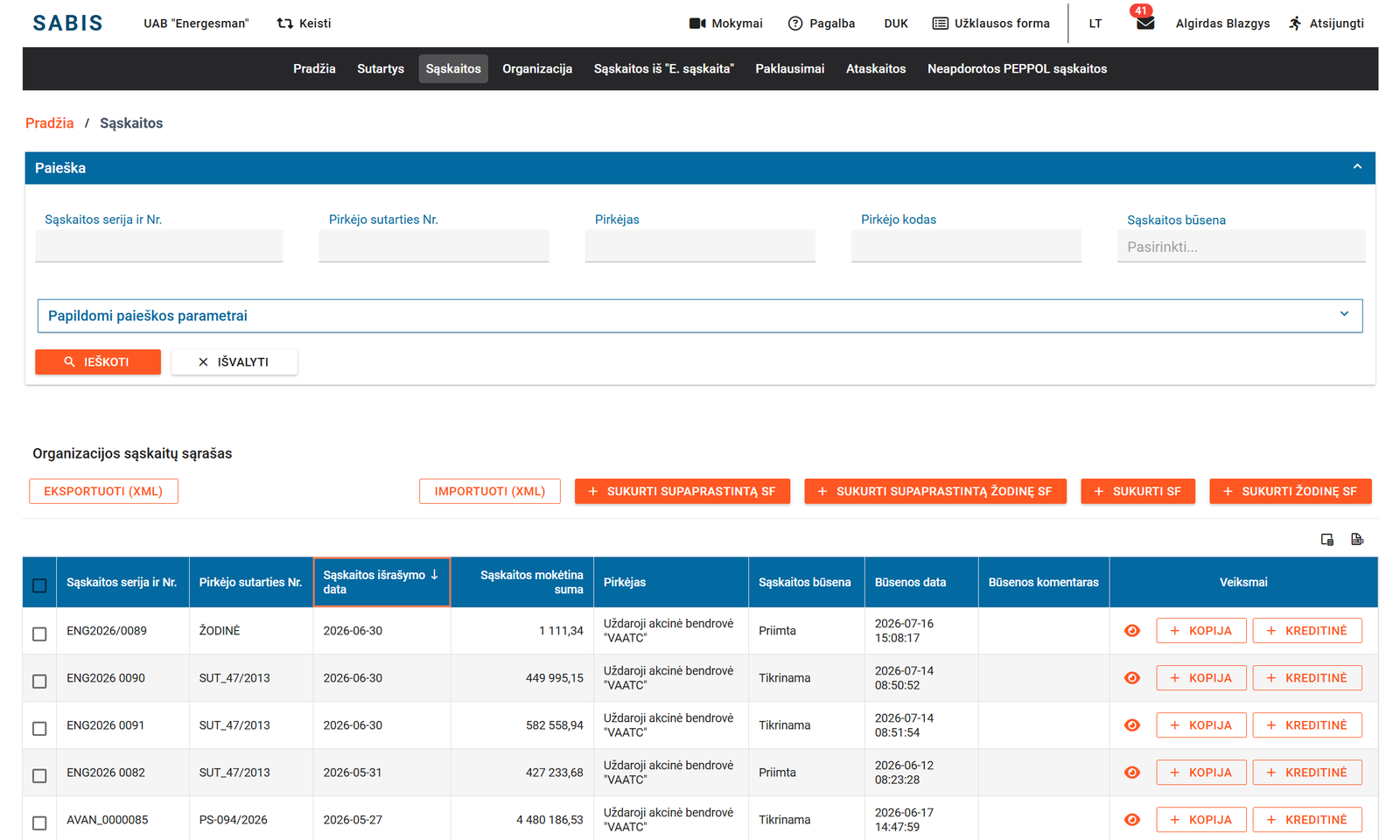
“A week has passed. Everyone is talking about the crisis and the need for urgent solutions, yet our invoices in the SABIS system are still under review and awaiting VAATC’s approval. We are attaching a screenshot as evidence. Nevertheless, we are doing our best to remain patient and still hope that VAATC will choose to cooperate,” says A. Blazgys.
Waste management continues
Waste management operations continued today. The conveyor transporting sorted waste directly to the neighbouring Vilnius Cogeneration Power Plant for energy recovery is also operating.
“We are grateful to our neighbours for their prompt response and willingness to help manage the current situation. Two parts of the system are now functioning – all that is needed is for VAATC to do its part, and the problems can be resolved,” says A. Blazgys.
As part of Energesman’s action plan, part of the plant site will be cleared by removing stored construction materials, including roof and wall cladding.
The freed-up area will be used to store sorted and compacted waste, which requires significantly less space. It will remain there until the accumulated waste has been processed through energy recovery.
The volume of waste at the sorting plant increased because the Vilnius Cogeneration Power Plant was shut down for scheduled maintenance for most of May, from 9 to 28 May. During the summer, the plant also reduces energy production and consequently accepts smaller volumes of waste for energy recovery.
“Now that VAATC has appointed Ecoservice and Ekonovus to carry out waste sorting, we expect waste-to-energy capacity to be allocated fairly, without giving preferential treatment to any waste management company. The cost of waste management is equally important for residents of the Vilnius region. It should not exceed Energesman’s pricing, because ultimately residents will bear the cost of decisions taken by public institutions. So far, the service rates charged by Ecoservice and Ekonovus have not been officially disclosed. We expect this information to be made public in the near future,” says attorney-at-law Dr Paulius Miliauskas.