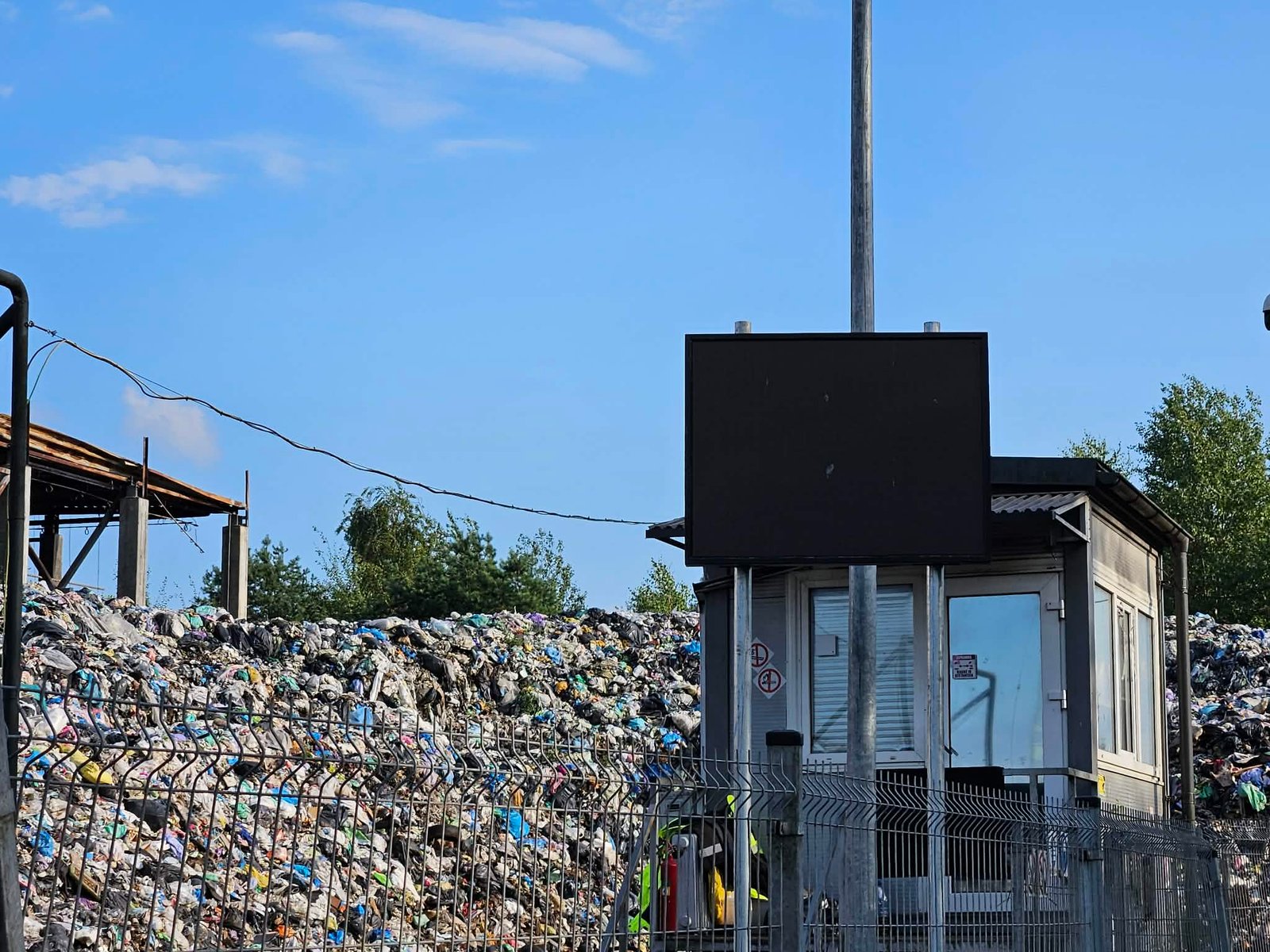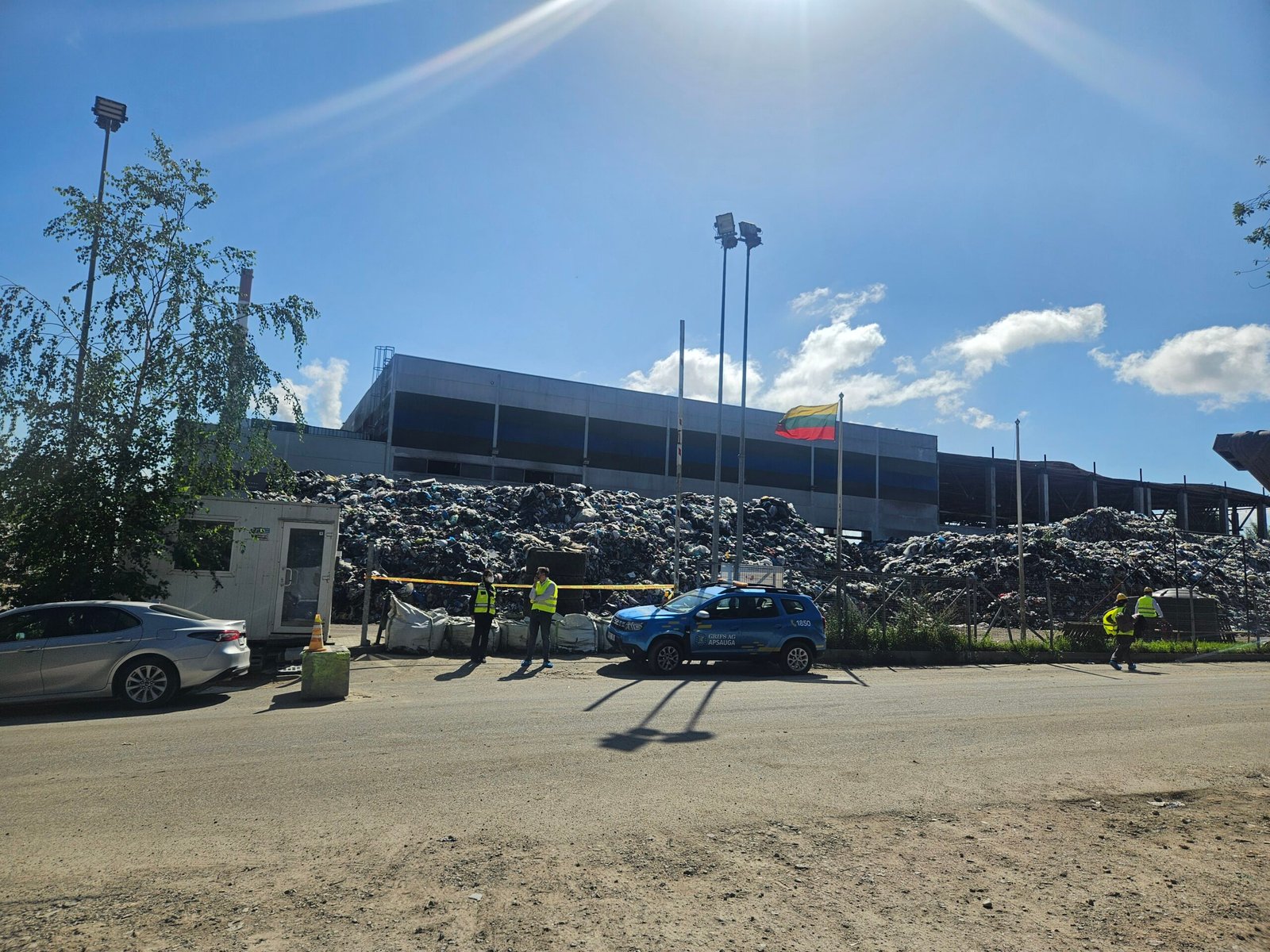
The court has not yet ruled on the legality of the termination of the Vilnius waste treatment plant contracts. The plant operator, Energesman, maintains that both the operating and modernization contracts remain valid and that their termination is unlawful, as there are no substantial grounds for doing so. Separate legal actions will be filed challenging the termination of these contracts.

The decision of the Vilnius Regional Court not to apply interim measures regarding the contract termination is based on decisions adopted by the Emergency Operations Centre (ESOC) and its Head (ESOV), an institution subordinate to the Vilnius City Municipality. Those decisions have already been appealed before the Regional Administrative Court.

“The courts are being misled because the ESOC and ESOV decisions present distorted information. This is a political institution currently headed by Dalius Krinickas, who is the mayor’s right-hand man in this market redistribution process. They adopt whatever decisions they wish, and those decisions immediately acquire legal force,” says Algirdas Blazgys, CEO of Energesman.

The decisions adopted by the Vilnius ESOC and ESOV are, in Energesman’s view, non-objective and discriminatory toward other regions and market participants that are not politically favoured. Recently, the Vilnius ESOC decided that the Vilnius cogeneration plant should not accept waste from the Alytus and Utena regions for incineration, a decision to which both regions have already expressed opposition. The Elektrėnai Municipality, where the Kazokiškės landfill is located, has also objected to the Vilnius ESOC decisions.

“The Vilnius ESOC and ESOV are exceeding their powers, because under the Law on Civil Protection a municipal-level emergency situation does not give the centre the authority to alter contractual relations. Nevertheless, courts must rely on these decisions until they are annulled, because they have been issued by an official public authority. This is precisely why we are simultaneously challenging all ESOC and ESOV decisions in court, as they currently form the basis for the entire situation,” says Dr Paulius Miliauskas, attorney-at-law and partner at the law firm Miliauskas ir Lauraitytė.

Under the waste treatment plant operating agreement, the contract may be terminated only if two conditions are met: there must be substantial grounds for termination and the other party must be given at least 20 working days’ notice.

“In our assessment, VAATC has failed to identify substantial grounds that would justify unilateral termination of the contract. We therefore consider the operating agreement to remain in force. The final decision on this matter will be made by the court,” says Dr Miliauskas.

If the court determines that one or both contracts with Energesman—the plant operating agreement and the modernization agreement—were terminated unlawfully, VAATC will be obliged to compensate the losses incurred. According to preliminary estimates, those losses amount to approximately EUR 20 million. The losses may continue to increase as the period during which VAATC has taken over the plant becomes longer.

During a podcast with Algis Ramanauskas on Thursday, Vilnius Mayor Valdas Benkunskas resorted to “dirty tactics” by claiming that the operator of the Vilnius waste treatment plant, Energesman, had allegedly “deliberately started withdrawing money from the company” in spring. The operator stresses that such statements do not reflect reality. This can easily be verified by law enforcement authorities by examining the company’s bank statements.

Spreading unfounded conspiracy theories

“The mayor has sunk very low – to the level of Eastern propaganda methods, using dirty tactics and spreading conspiracy theories. His statements are defamatory. This is extremely inappropriate for a politician of such a high rank and appears desperate,” says Algirdas Blazgys, CEO of Energesman.

After the fire, Energesman continued managing waste at the damaged plant. As a result, operating costs increased significantly due to the need to rent additional equipment, comply with instructions from the Vilnius City Municipality’s Emergency Operations Centre (ESOC), and restore the plant building.

The company’s annual financial report shows that Energesman recorded a loss of EUR 0.56 million last year.

“What money could you possibly ‘take out’ of a company operating at a loss? Nothing. We were putting money into the company to pay employee salaries, electricity bills, and fuel costs for loaders. After the fire, we financed regional waste management from our own funds to ensure that operations did not stop,” says A. Blazgys.

Municipality covered 0.4% of costs – yet calls it significant support

Since the fire, the Vilnius City Municipality has provided EUR 15,980 to cover additional costs. The other seven municipalities in the region and VAATC provided not a single euro. The mayor of Vilnius has not visited the plant even once since the fire.

During the podcast, the mayor described this support as a major effort:

“After the fire, we really made significant efforts to help the same company get back on its feet. We provided a lot of assistance and signed agreements for the restoration.”

“The mayor’s support amounted to 0.4% of the increased costs – a drop in the ocean. We were left to cover all additional expenses ourselves because we received no support from VAATC or the municipalities,” says A. Blazgys.

However, he draws attention to another aspect of the mayor’s statements:

“The mayor speaks as if he personally, rather than VAATC, made all decisions regarding contracts – their signing and termination. This clearly undermines the principle of institutional independence. Is VAATC merely a tool controlled by the mayor for redistributing the waste management market?”

VAATC debt exceeds EUR 6 million

VAATC’s debt to Energesman currently amounts to EUR 6.12 million. This includes EUR 1.23 million unpaid for services provided in May and June, and EUR 0.49 million for services provided in July. An additional EUR 4.4 million is owed under the plant modernization agreement.

“VAATC is seriously failing to fulfil its obligations under both the operating and modernization agreements. Its debt to us continues to grow, as we are already calculating late payment interest,” says A. Blazgys.

Funds were needed for equipment and ESOC decisions

Throughout the period following the fire, Energesman rented additional mobile equipment because two stationary sorting lines had been destroyed. The company paid EUR 100,000 per month for this equipment rental. In total, EUR 1.4 million (including VAT) was spent on renting mobile equipment. These costs were covered solely by Energesman.

As the emergency situation continued for an extended period, Energesman requested that VAATC, as the plant owner, rent the necessary equipment itself and provide it for the operator’s use. However, VAATC rejected this request.

Energesman also incurred approximately EUR 1 million (including VAT) in additional costs while implementing various ESOC instructions, including transporting waste to other regions, using more expensive incineration facilities, and managing additional waste streams.

Another EUR 0.3 million (including VAT) invoice was issued to Energesman by VAATC itself for the storage of 14,000 tonnes of unsorted waste at the Kazokiškės landfill. The decision to transport waste to the landfill was also made by ESOC.

Energesman has already invested approximately EUR 1 million in restoring the building and purchasing construction materials. The company has also spent additional funds on initial orders for new sorting equipment to modernise the plant.

Meanwhile, VAATC has not provided Energesman with any payment deferrals or discounts that could have helped stabilise disrupted cash flows.

VAATC and the Vilnius City Municipality frequently claim that waste carriers had to wait in long queues while the Vilnius waste treatment plant was operated by Energesman. What they fail to mention is that, in June, VAATC refused to launch the electronic queue management system installed this spring. The system would have regulated traffic flows and carriers arriving according to schedule would not have had to wait. The launch of the system was halted after a change in VAATC’s management.

The implemented solution is being omitted

“An extraordinary degree of cynicism is required to stand up at a meeting of the Committee on Environment and City Services and blame someone else when you yourself deliberately refused to improve the situation. Employees had already been trained to use the queue management system, but VAATC intentionally refused to launch it so that the queue problem would remain,” says Algirdas Blazgys, CEO of Energesman.

On 18 March this year, VAATC signed a contract with UAB Teracode, operating under the Logifly brand, to install an electronic queue management system at the Vilnius waste treatment plant for use by waste carriers. The contract value amounted to EUR 8,800.

Public procurement contract: https://viespirkiai.org/sutartis/2008048337

Project halted after the appointment of a new VAATC CEO

The system was scheduled to become operational on 1 June. Display columns had already been installed at the plant entrance and connected to the network. Energesman had ordered and connected the modems and internet service, and the system had been fully tested.

Employees of both VAATC and Energesman, including the logistics manager and weighbridge operators, had been trained to use the system. The only remaining step was to provide training for the carriers, and the queue issue could have been resolved in June.

However, after Marius Švaikauskas became CEO of VAATC on 28 May, the project was suddenly suspended and has never been launched.

“This can only happen in one situation: when you arrive with the goal of removing the operator rather than working together with it. There is no other explanation for such actions,” Mr Blazgys emphasizes.

Priority for carriers arriving according to schedule

Under the installed system, carriers arriving at the waste sorting plant would scan a QR code. The system would automatically create two separate queues. The first queue would be for carriers arriving at their designated time according to a pre-agreed schedule. The second queue would be for carriers arriving earlier or later than their allocated time.

Priority for unloading waste would be given to carriers arriving on time. As a result, they would not have had to wait in the general queue.

“This would have solved the core problem: some carriers arrive not according to the agreed schedule but at a time convenient for them, which creates congestion and leads to waiting times,” Mr Blazgys explains.

Records show that in the period following the fire, 50% of carriers arrived outside their allocated time slot—meaning every second waste collection vehicle. This disadvantaged carriers that arrived on time, as they still had to wait in the common queue.

Energesman, for its part, consistently complied with the schedule established by the Emergency Operations Centre, which required the plant to receive at least six waste collection vehicles per hour. This meant that each vehicle was allocated ten minutes for weighing and unloading waste.

No violations by Energesman related to non-compliance with this schedule have been recorded.

Among the carriers was a company seeking to acquire the operator

It is important to note that the majority of waste from the Vilnius region is collected and transported by Ecoservice and Ekonovus.

It was Ecoservice that, through one of its executives and via a third party, submitted an offer to Energesman’s shareholder to purchase the company’s shares. The offer was made just a few days before VAATC announced a warning of its intention to terminate its contracts with Energesman.

Waste management costs for residents of the Vilnius region are increasing by at least EUR 12 million per year, and this amount is likely to reach EUR 15 million because VAATC is not disclosing all contracts, making it impossible to verify the exact cost of waste management. The waste sorting plant can be rebuilt only within approximately two years, and its reconstruction is expected to cost around EUR 20 million.

As a result, approximately EUR 50 million in additional funds will be spent over two years. This equals about EUR 57 per resident.

Waste management costs have doubled

“The mayor’s promises have turned into a torch. The decisions that have been made contain no business logic whatsoever – they are clearly not beneficial to residents. The question then arises: who do they benefit, and whose interests are VAATC and the Mayor of Vilnius representing?” asks Algirdas Blazgys, CEO of Energesman.

On Friday, VAATC announced that waste management currently costs EUR 100–110 per tonne. However, there is currently no possibility to verify this figure because VAATC has not disclosed the annex to its contract with the Vilnius Combined Heat and Power Plant (VKJ), which specifies the waste incineration tariff.

It is also unknown how much the treatment of the biological fraction of waste currently managed by VAATC costs.

Based on the publicly available value of the VKJ contract and the planned volume of waste to be incinerated, the incineration cost amounts to EUR 73 per tonne (contract value EUR 2.2 million, planned incineration volume 30,000 tonnes).

In that case, the total waste management cost rises to EUR 130 per tonne.

“If we take the average between our calculations and those of VAATC, we arrive at EUR 120 per tonne. That means an additional EUR 15 million per year. Exactly as we have said from the very beginning,” Blazgys calculates.

Until now, Energesman was paid EUR 53.81 per tonne for full waste management, including incineration and treatment of the biological fraction. Approximately 220,000 tonnes of waste are generated annually in the Vilnius region.

Rebuilding the plant will also cost more

On Friday, the mayor publicly acknowledged that lower waste management prices can be restored only after the plant is rebuilt.

Even if VAATC were to announce a new public procurement tender immediately, the entire process until the commissioning of new equipment would take at least two years. It may take even longer due to legal disputes arising from the termination of the already signed modernization agreement with Energesman.

Throughout this period, waste management will remain more expensive, resulting in approximately EUR 30 million in additional expenditure.

The reconstruction itself will also become more expensive. In the public procurement announced by VAATC in December, other bidders submitted offers of approximately EUR 16 million. UAB Motecha together with Huttechnika sp. z o.o. offered to manufacture new equipment for EUR 15.55 million, while UAB Azortum offered EUR 15.74 million.

“By the time a new procurement procedure is completed, taking into account high inflation and reduced competition, the price will certainly increase to around EUR 20 million. And residents themselves will have to pay this entire amount, because the already allocated EUR 3.6 million in European Union support will be lost, along with our commitment to reimburse VAATC for the full amount invested in the equipment plus interest,” Blazgys emphasizes.

Under the modernization agreement signed on 15 May, Energesman had offered to install new equipment for a significantly lower amount – EUR 11.75 million – and subsequently repay this amount to VAATC over the remaining operating period while paying 6% interest.

“If we add together two years of higher waste management costs and the increased reconstruction costs, we arrive at EUR 50 million in additional expenditure. The actual amount will be even higher because VAATC will not be able to operate the waste plant as efficiently as a private company can. This is due both to operational capabilities and to bureaucratic procedures,” Blazgys says.

The plant could be operated illegally

Serious questions arise as to whether VAATC can operate the waste plant at all without an Integrated Pollution Prevention and Control (IPPC/TIPK) permit. The currently valid permit has been issued to the plant operator, UAB Energesman.

Obtaining a new IPPC permit may take between one and three years. Until then, operations would be conducted illegally, in violation of the Environmental Protection Law.

Under Energesman’s existing IPPC permit, the company is authorized to store up to 24,000 tonnes of waste at the plant. This limit has never been exceeded. According to official GPAIS waste accounting data, 18,800 tonnes of waste were present at the plant on 23 July. More than 10,000 tonnes of this volume had already been sorted and baled and were ready for incineration.

VAATC took over operation of the plant on 24 July.

As blogger Skirmantas Malinauskas publicly stated on Sunday, the takeover of the Vilnius mixed waste plant is part of an ongoing redistribution of the waste market. Competitors are currently in a particularly advantageous position to take over the plant because all preparatory work for rebuilding the new waste sorting facility has already been completed.

Calculations

(120 − 53.81) × 220,000 = EUR 14.56 million

(110 − 53.81) × 220,000 = EUR 12.36 million

VAATC does not hold an Integrated Pollution Prevention and Control (IPPC/TIPK) permit required to operate the Vilnius mixed waste treatment plant. VAATC is currently managing waste in violation of the Environmental Protection Law. Obtaining a new IPPC permit may take between one and three years, and until then the activities would be carried out unlawfully. Today, the plant was not operating because its electricity supply had been disconnected.

Existing permit will not be transferred

The currently valid IPPC permit has been issued to the plant operator, UAB Energesman, with whom VAATC still has a valid operating agreement.

“We will certainly not agree to transfer our existing IPPC permit to VAATC, which has taken over the plant. They will have to start the entire permitting process from the beginning. This will be a long and complicated process that will take several years,” says Algirdas Blazgys, CEO of Energesman.

Decisions adopted by the Vilnius City Emergency Operations Centre have lower legal authority and cannot justify VAATC’s unlawful activities carried out without a pollution permit required under the Environmental Protection Law.

Electricity supply disconnected

This morning, electricity was disconnected at the Vilnius waste sorting plant and the facility was completely shut down.

To date, VAATC has not returned all assets located at the plant that belong to Energesman. Their value amounts to approximately EUR 3 million and includes shredders, magnets, bioconversion equipment, construction materials, computers, and other property.

The value of Energesman’s assets located at the plant exceeds the value of the equipment owned by VAATC itself, which amounts to only about EUR 2 million.

“Today VAATC allowed employees to retrieve part of their personal tools and tools belonging to the company. These tools had been stored in a container that VAATC representatives unlawfully broke into. Some tools were missing and had been used without authorization by VAATC representatives,” says Blazgys.

VAATC also unilaterally moved one of Energesman’s shredders outside the plant territory, where the area is not protected, without informing the company.

Waste is being managed at significantly higher cost

The independent civic public procurement analysis initiative *Viešpirkiai* has published contracts concluded by VAATC with Ecoservice, Ekonovus, and the Vilnius Combined Heat and Power Plant.

Under these contracts, VAATC has committed to pay EUR 62.8 per tonne (excluding VAT) to Ecoservice and EUR 77 per tonne (excluding VAT) to Ekonovus for waste treatment.

An additional EUR 73 per tonne (excluding VAT) is paid to the Vilnius Combined Heat and Power Plant for waste incineration.

Additional costs are also incurred for treatment of the biological fraction of waste in the Vilnius MBA tunnels currently operated by VAATC, although the exact price of this service has not been disclosed.

As a result, the total waste management cost may reach EUR 130 per tonne, whereas Energesman previously managed waste for EUR 53.81 per tonne (excluding VAT), including incineration and treatment of the biological fraction.

The publicly accessible website Viespirkiai.org also lists additional contracts concluded by VAATC for the rental of loaders, screeners and lifting equipment, waste transportation, security services, cleaning services, and public relations services. The total value of contracts concluded during July has already reached EUR 10.58 million.

“It is obvious that waste generated by residents of the Vilnius region is already being managed at more than twice the previous cost. VAATC is wasting reserves accumulated from residents’ payments that should have been used for investment and improvement of the waste management system – this is criminal,” Blazgys emphasizes.

As blogger Skirmantas Malinauskas publicly stated on Sunday, the takeover of the Vilnius mixed waste plant is part of an ongoing redistribution of the waste market. Competitors are currently in a particularly advantageous position to take over the plant because all preparatory work for rebuilding the new waste sorting facility has already been completed.

The independent civic public procurement analysis initiative “Viešpirkiai” has published waste management contracts concluded by VAATC with Ecoservice, Ekonovus, and the Vilnius Combined Heat and Power Plant. The price amounts to EUR 135.8 per tonne (excluding VAT) for waste treatment and incineration. If such prices continue to be paid, annual waste management costs for residents will increase by approximately EUR 18 million.

VAATC misled the public about contract negotiations

The price currently paid by VAATC for waste management is nearly three times higher than the price previously paid to Energesman, which managed waste for EUR 53.81 per tonne excluding VAT, including incineration. Approximately 220,000 tonnes of waste are generated annually in the Vilnius region.

The contracts were concluded on 16–17 July. Since then, VAATC has deliberately avoided disclosing the prices and publicly claimed that the contracts were still under negotiation.

“We are witnessing yet another false statement by VAATC – one of many. This is a desperate attempt to justify an artificially created waste crisis. It is evident that these actions are not in the interests of residents, because waste management costs are increasing. It is only a matter of time before these higher costs appear in residents’ utility bills,” says Algirdas Blazgys, CEO of Energesman.

VAATC concluded separate contracts for waste treatment and waste incineration. It committed to pay EUR 62.8 per tonne (excluding VAT) to Ecoservice and EUR 77 per tonne (excluding VAT) to Ekonovus for waste treatment.

An additional EUR 73 per tonne (excluding VAT) will be paid to the Vilnius Combined Heat and Power Plant for waste incineration.

When waste is treated by Ecoservice, the total cost of waste treatment and incineration reaches EUR 135.8 per tonne (excluding VAT) (EUR 62.8 + EUR 73).

The publicly accessible website viespirkiai.org also lists additional contracts concluded by VAATC for the rental of loaders, screeners and lifting equipment, waste transportation, security services, and cleaning services. The total value of contracts concluded during July has already reached EUR 10.58 million.

“VAATC has already committed to paying these millions to suppliers – and this is residents’ money. None of these expenses would have arisen if VAATC had complied with the signed settlement and modernization agreements and had not artificially created this crisis,” Blazgys emphasizes.

VAATC is misleading the public

VAATC’s public claims that 30,000 or even 40,000 tonnes of waste have accumulated on the plant site do not correspond to official data.

On 23 July, the GPAIS waste accounting system recorded 18,800 tonnes of waste. Last week, specialists from the Environmental Protection Department visited the plant and confirmed by drone inspection that approximately 20,000 tonnes of waste were present at the facility.

VAATC unlawfully took over the plant on 24 July. Until that date, Energesman continued to process waste and deliver it for energy recovery. Exact daily quantities of accepted and incinerated waste were reported to the National Crisis Management Centre.

“VAATC is deliberately misleading and frightening the public in order to justify its takeover of waste management operations and, according to information made public, to redirect waste flows to interested business groups,” says Dr. Paulius Miliauskas, partner at the law firm Miliauskas ir Lauraitytė.

According to the lawyer, there are reasonable grounds to question whether Marius Švaikauskas is properly performing his duties as head of VAATC.

“He is undermining the MBA plant modernization project that is important to the residents of the Vilnius region and, within a very short time since taking office at VAATC, is committing enormous amounts of money that belong to the region’s residents. Under the law, the activities of the head are supervised by the VAATC Board. The question arises whether the Board is properly performing its duties if funds are being spent recklessly right under its nose. The Board is obliged to act in the interests of all residents of the region,” Miliauskas notes.

As blogger Skirmantas Malinauskas publicly stated on Sunday, a redistribution of the waste market is currently taking place. Competitors are in a particularly favorable position to take over the plant because all preparatory work for rebuilding the new waste sorting facility has already been completed.

Calculation

EUR 135.8 − EUR 53.81 = EUR 81.99 additional cost per tonne

EUR 81.99 × 220,000 tonnes = EUR 18.04 million per year


Following the fire at our facility, Energesman has been subjected to dozens of inspections by the Environmental Protection Department and the Fire and Rescue Department. Violations were recorded for even minor issues – for example, for a container temporarily placed outside the fence.

At the same time, institutions failed to identify that competitor Ecoservice was allegedly using 0.7 hectares of state-owned land without legal grounds and storing waste there, while they have also raised no objections regarding Ekonovus, which is processing waste directly on bare ground near the banks of the Vilnelė River.

State-owned land used as private property

“It is difficult not to be astonished by such double standards. A legitimate question arises: whose interests are these institutions serving? In our view, they have played a significant role in what appears to be an unfair competition scheme,” says Algirdas Blazgys, CEO of Energesman.

On Friday, 24 July, it was announced that following an appeal by the Lithuanian Green Party to the State Territorial Planning and Construction Inspectorate, violations had been identified at the Ecoservice waste management facility located at Gariūnų g. 71, Vilnius.

According to the publicly available information, approximately 0.7 hectares of state-owned land had been incorporated into the Ecoservice operating area. The land contains fences, gates, vehicle weighing equipment, waste storage areas, modular containers, stored waste and other infrastructure related to the company’s operations. These elements are visible on the REGIA public mapping system.

“We have not heard that the Environmental Protection Department recorded or publicly announced a violation by Ecoservice for storing waste outside its officially designated facility boundaries. Yet Energesman was cited for temporarily placing several containers with sorted metal waste outside the fence after the fire, while we were making space for equipment needed to dismantle damaged building structures,” Blazgys notes.

The Environmental Protection Department also recorded a violation against Energesman because several plastic bags had been blown by the wind outside the fence after the fire and had not yet been collected by employees.

“Meanwhile, a competitor appears to be allowed to keep waste outside its official territory on a permanent basis without attracting any objections from the authorities. How can that be possible?” Blazgys asks.

Waste processed near the Vilnelė river while institutions remain silent

The Environmental Protection Department has stated that part of Energesman’s waste is stored on a surface that is not impermeable to water, creating a potential risk that leachate and contaminated runoff could enter the soil.

On 17 July, the Department issued a public statement to that effect even though the inspection procedure had not yet been completed and the alleged violation had not been officially confirmed. Nevertheless, this preliminary assessment was subsequently relied upon by VAATC and the Vilnius City Municipality when taking over Energesman’s operations.

Energesman emphasises that the entire Vilnius MBA site is equipped with a contaminated water collection system designed to prevent water from entering the ground.

At the same time, the Environmental Protection Department has not publicly identified any violations concerning Ekonovus, where piles of unsorted waste are reportedly stored directly on bare ground.

Images circulated on Facebook last week showing waste allegedly being processed on open ground without a hard surface at a site operated by Ekonovus in Naujoji Vilnia, Pramonės g. 141, Vilnius. The Vilnelė River flows only a short distance from the site.

Residents’ video footage here.

“Rain falls directly onto the waste, runoff may reach the Vilnelė River and seep into the ground, yet we hear no public response from the responsible institutions,” Blazgys says. “Residents tagged the Vilnius City Municipality, the Mayor and state institutions in the published footage, so it is difficult to believe that the situation went unnoticed.”

Unscheduled inspection conducted days before the takeover

Under the rules approved by the Fire and Rescue Department, waste must be stored at least 15 metres away from buildings.

“If we expanded our site onto state-owned land as our competitors appear to have done, we could easily comply with that requirement. Instead, we acted lawfully and already in 2024 asked VAATC and the Vilnius City Municipality to form an additional land plot for the Vilnius MBA facility because the existing site is too small to meet the firefighters’ requirements. No additional plot has been allocated to this day,” Blazgys says.

On 8 July, officers of the Vilnius Fire and Rescue Board carried out an unscheduled inspection at the Energesman site and recorded a violation for storing waste less than 15 metres from buildings.

VAATC and the Vilnius City Municipality later relied on this finding when announcing the termination of the operating agreement on 10 July and when subsequently filing a court claim.

“The timing is striking. Why was there a sudden need for another inspection on 8 July? If the same standards had been applied to competitors, violations related to the use of state-owned land and waste storage outside authorised plots should also have been identified,” Blazgys says.

As blogger Skirmantas Malinauskas stated publicly on Sunday, the current developments may be linked to a broader redistribution of the waste management market. In his view, competitors now have a strong commercial incentive to take over the facility because the preparatory work for rebuilding and modernising a new waste sorting plant has already been completed.

We confirm that an offer was made to the company’s shareholder to sell its shares. The interest in acquiring the shares was conveyed by one of the executives of the competing company Ecoservice. After the offer was rejected, we were informed within a few days that all contracts would be terminated.

Financial pressure

“A consistent and deliberate sequence of actions is becoming apparent. After a new head of VAATC was appointed, all payments under our valid contracts were suspended, we were prevented from using factoring services and from borrowing funds. When we encountered a shortage of working capital, we received an offer to sell our shares. We rejected it, and shortly afterwards it was announced that all contracts with us were being terminated,” says Algirdas Blazgys, CEO of Energesman.

The offer to acquire the shares was received on 8 July and was communicated through a third party via a messaging application.

We invite you to watch the latest episode by blogger Skirmantas Malinauskas, in which he cites his own sources indicating that there are indeed parties interested in taking over our company’s operations. Our topic begins at minute 43, but we also encourage you to watch the first part of the episode, as it provides a revealing perspective on how state institutions can become instruments in the hands of influential individuals.


Contracts terminated after the offer was rejected

The termination of the contracts was announced on 10 July, shortly before the end of the working day. The company was not allowed to participate in the board meeting at which this important decision, carrying significant consequences for the entire region, was taken.

The decision was also not discussed with the other seven municipalities of the Vilnius region whose waste is processed at the facility. These municipalities are minority shareholders of VAATC, and their status does not diminish their right to be informed and involved in decisions of such importance.

The contract termination documents were prepared hastily and unprofessionally. They did not include the 20-business-day notice period required under the facility operating agreement.

The reasons cited for termination were long-standing and complex issues in which VAATC itself and the Vilnius City Municipality are involved, and it was therefore well known that these issues could not be resolved within 20 business days.

Preparatory work had already been completed

“At this stage it is highly advantageous for a competitor to take over the facility, because the preparatory work for reconstruction and modernisation has already been completed. VAATC has full information about the equipment manufacturers and their contacts, as tripartite agreements had already been signed,” says Blazgys.

Most of the building reconstruction work has also already been completed. All load-bearing structures have been installed; only the façade and roof cladding remain to be fixed in place. These materials have already been delivered to the facility and have now been taken over by VAATC.

VAATC took over the facility despite the court not explicitly authorising it

On the evening of Friday, 24 July, VAATC, accompanied by a group of security personnel, took over the operation of the Vilnius waste treatment facility. The Mayor of Vilnius, Valdas Benkunskas, was also present at the site. VAATC is currently advertising vacancies on recruitment portals and social media for employees to operate the facility, and attempts were made to recruit Energesman employees as well.

VAATC relied on a ruling issued by the Vilnius District Court on Friday. However, the ruling does not state that VAATC is entitled to take over the operation of the facility. It expressly grants only the right to dispose of the MBA buildings and equipment and to allow VAATC representatives access to the site.

The ruling has created a legal contradiction because the right of disposal is clearly defined by law. It allows an owner to sell, donate, pledge or otherwise dispose of property, but it does not grant the right to possess, manage or use that property. VAATC did not request the right to operate the waste treatment facility in its claim, and the court therefore did not grant such a right.

Energesman was denied access and its property was also taken over

“The takeover of the facility shows many signs of unlawful self-help. If it is established in court that VAATC had no right to take over the facility and significant damage is found to have been caused, criminal liability may arise,” says Dr Paulius Miliauskas, Partner at the law firm Miliauskas ir Lauraitytė.

On Friday, VAATC representatives did not allow Energesman’s CEO to enter the facility, prevented him from collecting his personal belongings, and did not allow an inventory of Energesman property remaining on the site to be made.

Energesman’s shredders, magnets, bioconversion equipment, construction materials, computers and other assets remain at the facility. Their value amounts to several million euros.

The City of Vilnius owns 76.51% of VAATC shares, while the remaining shares are held by other municipalities of the Vilnius region.

On Friday evening, VAATC, accompanied by a group of security personnel, forcibly entered the Vilnius Mixed Municipal Waste Sorting Facility, ordered employees of the facility’s operator, UAB Energesman, to leave their workplaces, and took control of the site. The Mayor of Vilnius, Valdas Benkunskas, was also present at the facility.

VAATC relied on a ruling issued by the Vilnius District Court on Friday. However, the court did not grant VAATC the right to take over the operation of the facility. The ruling merely granted VAATC the right to dispose of the MBA facility buildings and equipment and allowed its representatives to enter the premises. It did not authorise VAATC to assume operational control of the plant.

The court’s ruling has created a legal contradiction because the right of “disposal” is clearly defined under Lithuanian law. It allows the owner to sell, donate, pledge or otherwise dispose of property. However, it does not confer the right to possess, manage or use that property.

Moreover, VAATC did not ask the court to grant it the right to operate or manage the waste treatment facility, and therefore the ruling did not provide such authority.

“We witnessed what many people refer to as the real waste mafia. I was not allowed to enter the facility, nor was I permitted to collect my personal belongings. We were also prevented from making an inventory of our company’s assets located on the premises, even though a substantial amount of equipment belonging to Energesman remains there,” said Algirdas Blazgys, CEO of Energesman.

The facility still contains Energesman’s shredders, magnets, bioconversion equipment, construction materials, computers and other assets worth several million euros.

While the CEO of Energesman and the company’s legal counsel were going to the facility, the Mayor of Vilnius, Valdas Benkunskas, was inside the premises.

“This bears all the hallmarks of unlawful self-help. VAATC has arbitrarily taken control of the facility despite having no legal right to do so at this stage. The court granted only the right to dispose of the property and to enter the site. It did not authorise VAATC to remove Energesman employees or prevent them from accessing the premises where both their personal belongings and company property remain,” said Dr Paulius Miliauskas, Partner at the law firm Miliauskas ir Lauraitytė.

Under the wording of the court’s ruling, the facility operating agreement between VAATC and Energesman remains in force.

Energesman will continue to defend its rights through all available legal means. The company will also appeal Friday’s ruling of the Vilnius District Court. Under Lithuanian law, the appeal must be filed within seven days.

Operator of the Vilnius Mixed Municipal Waste Sorting Facility, UAB Energesman, will comply with the ruling of the Vilnius District Court. The company will allow VAATC to exercise its right to dispose of the MBA facility buildings and equipment and will continue to grant VAATC representatives access to the site, as it has always done. At the same time, Energesman will continue to fulfil its obligations under the facility operating agreement and carry on processing waste.

In its application to the court, VAATC requested an order prohibiting Energesman from “obstructing” VAATC representatives from entering the waste sorting facility and from “disposing of” the buildings and equipment owned by VAATC.

Under Lithuanian property law, the right of disposal is one of the three core ownership rights and allows an owner to sell, donate, pledge or otherwise dispose of property. The other two rights are the right to possess (manage) and the right to use the property.

“We have never prevented, are not preventing, and will never prevent VAATC representatives from entering the site or exercising their right to dispose of their property. However, VAATC did not ask the court to grant it the right to possess, manage or use the buildings and equipment, and the court did not grant such rights. Therefore, we remain obliged to fulfil our obligations under the operating agreement and continue processing waste – and that is exactly what we will do,” said Algirdas Blazgys, CEO of Energesman.

In the reasoning of its ruling, the court itself acknowledged that VAATC’s chosen wording – requesting an order prohibiting the disposal of the buildings and mobile equipment – “is not entirely accurate from the perspective of property law.”

“The court’s ruling has only added further confusion to an already complicated situation. As before, VAATC remains entitled to dispose of the buildings and equipment it owns and to access the site, while Energesman continues to have the right to possess and use those assets. Under this ruling, VAATC has not been granted the right to take over the operation of the facility,” said Dr Paulius Miliauskas, Partner at the law firm Miliauskas ir Lauraitytė.

Energesman continues to have both the right and the obligation to receive and process waste at the Vilnius Mixed Municipal Waste Sorting Facility, as the facility operating agreement remains in force.