The waste crisis in Vilnius has not ended – it has only begun and could continue for another two, three or even five years. This is how long legal disputes in court may take and how long it may take until the waste sorting plant is rebuilt. Vilnius risks becoming dependent on several waste management companies that would both collect and sort waste, further reducing competition in the waste management sector.

The crisis will continue until a new plant is operational

As disputes over both the operation of the plant and the termination of modernisation agreements will be resolved in court, VAATC will face difficulties launching a new public procurement process for the plant’s reconstruction until these disputes are concluded. Questions may also arise regarding the legality of a new procurement process for selecting a plant operator.

“Court proceedings at all instances can take up to five years. If the case is lost, compensation for damages and lost income for the entire period would have to be paid – we are talking about tens of millions of euros,” says attorney Dr Paulius Miliauskas, partner at the law firm “Miliauskas ir Lauraitytė”.

The reconstruction of the plant building would also become VAATC’s responsibility – the organisation would have to arrange and finance the completion of these works itself. This would require launching another public procurement process, which would take additional time.

“For the entire period – which could mean several years – waste would mainly be managed using mobile equipment. This would mean less recovery of recyclable materials and higher volumes of waste sent for incineration and to landfill. Therefore, the waste crisis would continue throughout this period,” says Algirdas Blazgys, CEO of Energesman.

It is also important to note that VAATC has no practical experience in operating such a plant.

“VAATC has historically been an organisation focused mainly on administrative processes. Operating a waste sorting plant is not as simple as it may appear at first glance. Mixed waste is contaminated, which means equipment frequently breaks down. VAATC itself operates the Kazokiškės landfill – we can all see how challenging this has been, with repeated violations being recorded and residents suffering the consequences,” emphasises A. Blazgys.

Competition will decline

If waste management is transferred to Ekonovus, Ecoservice and Ekobazė, Vilnius will become fully dependent on these several companies. Together with Energesman, these were the four largest waste management companies operating in the Vilnius region.

Until now, these companies collected waste from residents and transported it to sorting facilities, as well as sorted separately collected plastic, paper, glass and metal waste.

“Market concentration will increase further, while competition will decline – Vilnius will have no alternative options if disputes arise with these companies. When competition disappears, companies can increase prices without restrictions and dictate their own conditions, because there is simply no alternative,” emphasises P. Miliauskas.

EU funding will be lost

If VAATC takes over the operation of the waste sorting plant, Vilnius will not be able to use European Union funding, as EU financing can only be allocated to waste management facilities that have legally selected private operators.

Without a private operator, EU funding would also not be available for modernising Zone A of the plant (food and kitchen waste treatment), which will cost EUR 3.6 million and which VAATC had committed to modernising directly.

In addition, EUR 7.5 million in EU funding already allocated to Energesman for textile and plastic recycling could be lost.

Preliminary estimates show that the disruption caused by VAATC could cost residents of the Vilnius region more than EUR 50 million due to increased waste management and incineration costs, plant reconstruction expenses and reduced competition. If legal disputes continue for a long time, the amount could increase even further.

VAATC’s refusal to pay EUR 1.23 million in invoices for services provided by UAB Energesman in May and June is unlawful and constitutes a breach of contract. The waste received at the plant during those months was properly sorted, baled and is awaiting incineration. Under the plant operation agreement, VAATC is obliged to pay Energesman based on the amount of waste delivered to the facility during the respective month, not on the amount of waste that has already been incinerated.

Waste was properly processed

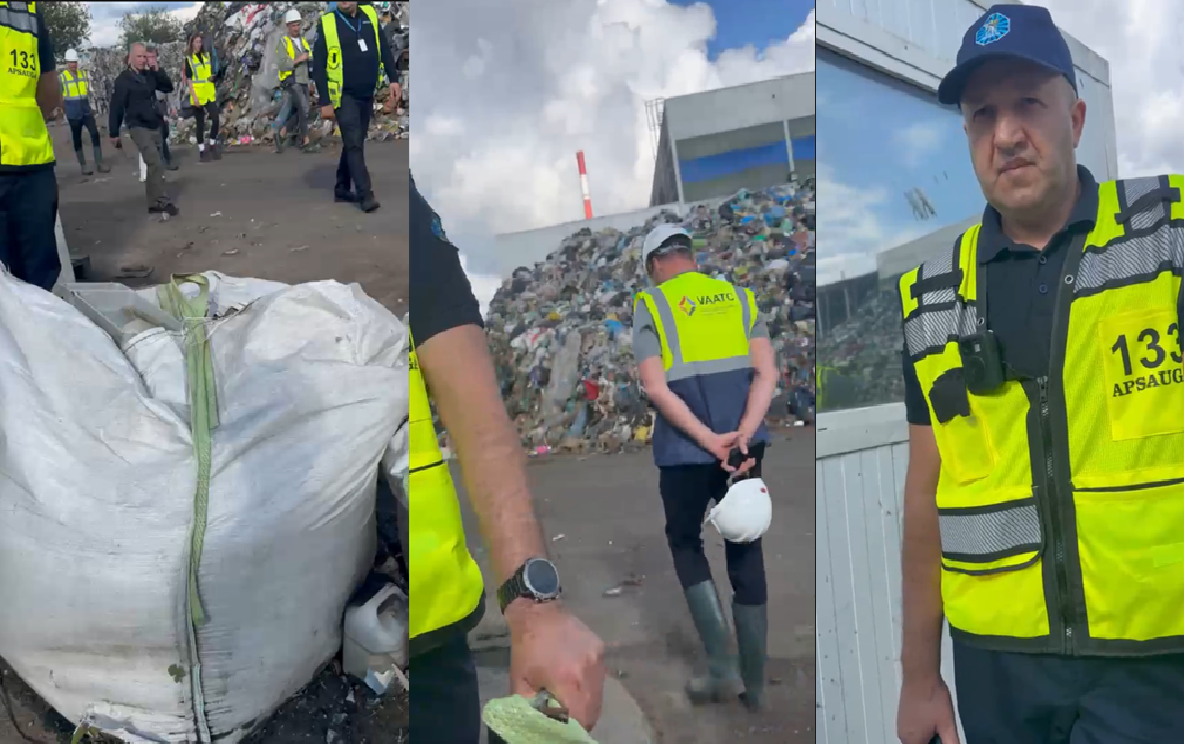
The unsorted waste currently located on the plant’s premises was delivered during July. This is confirmed by Lithuania’s national waste accounting system (GPAIS), which records all waste movements and their exact quantities.

According to GPAIS, 6,697 tonnes of mixed municipal waste were delivered to the Vilnius Mixed Municipal Waste Sorting Plant between 1 and 15 July. In addition, during June and July the plant received another 1,797 tonnes of biodegradable waste from Ekonovus and Ecoservice under an order issued by the Emergency Operations Centre (ESOC).

“VAATC justifies its refusal to pay by referring to the amount of waste recorded at the plant in July. These are different reporting periods, so the situation in July does not prove that services were not provided in May and June. All waste delivered in May and June was properly sorted, baled and stored until it can be incinerated. This is fully permitted under the contract and has been the standard practice every summer,” says Algirdas Blazgys, CEO of Energesman.

Contrary to the contract and the law

There are currently around 19,000 tonnes of waste on the plant’s premises. More than 10,000 tonnes have already been sorted, processed and prepared for incineration. The Vilnius combined heat and power (CHP) plant currently accepts 200 tonnes of waste per day from Energesman for energy recovery. The company requested that this daily quota be increased. However, on 17 July the Emergency Operations Centre decided instead to reduce the amount allocated to Energesman even further.

“The contract does not state that VAATC only has to pay us once the waste has been incinerated. It clearly requires payment based on the weight of the waste delivered to the plant during the relevant month. The acceptance certificates for May and June have been agreed and approved by VAATC, the waste has been sorted and baled, and therefore the refusal to pay is a clear breach of contract. This is yet another obvious indication that VAATC is deliberately trying to force us out by withholding payments, exactly as we have been saying from the very beginning,” stresses A. Blazgys.

At present, VAATC has failed to pay Energesman EUR 0.23 million (including VAT) for services provided in May and more than EUR 1 million (including VAT) for services provided in June. Under Lithuania’s Law on the Prevention of Late Payments in Commercial Transactions, VAATC is required to settle these invoices within 30 calendar days.

Other companies are paid – Energesman is not

VAATC has also failed to pay Energesman for biodegradable waste delivered to the plant and subsequently processed by the company.

Biodegradable waste is placed into sealed composting tunnels, where warm air is continuously circulated for several weeks. This process dries and stabilises the material, after which Energesman must arrange transportation to the Kazokiškės landfill.

“This process consumes significant amounts of electricity, requires transport services, our employees operate the process, and we must maintain the equipment. Yet we have not received a single euro for this work, even though 1,000 tonnes of waste were delivered back in June,” says A. Blazgys.

Energesman has contacted VAATC on three separate occasions seeking to agree on a payment procedure for these services, but has received no response.

“Double standards are being applied. VAATC pays Ekonovus and Ecoservice for waste treatment, while we perform part of that treatment process but are denied payment. It is important to understand that the ESOC order obliges us to accept and process the waste, but it does not require us to do so free of charge. Likewise, the same ESOC order obliges the combined heat and power plant to accept and incinerate waste, yet that service is paid for,” notes A. Blazgys.

Intention to transfer operations to another company

The company has repeatedly requested compensation for the additional costs incurred from the Vilnius City Municipality, but all requests have been rejected.

“We have no reason to believe the outcome will be different this time, especially given the overall situation and the apparent determination to take over the modernisation and operation of the plant by any means possible and transfer these contracts to another company,” says A. Blazgys.

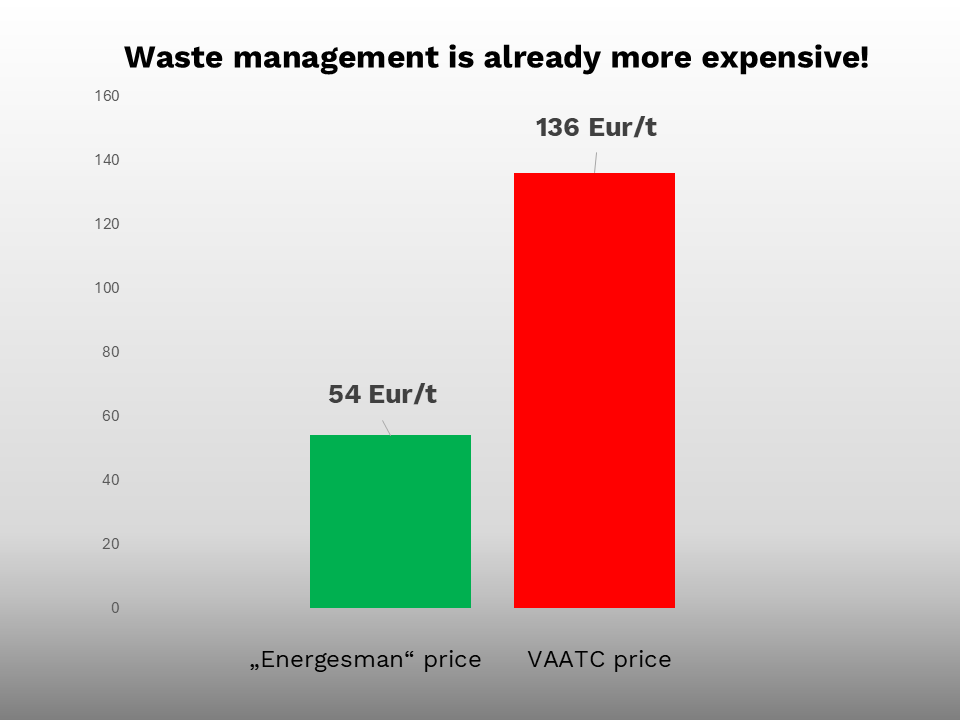
Under the waste sorting plant operation agreement, VAATC is obliged to pay Energesman EUR 53.81 (excluding VAT) for every tonne of mixed municipal waste delivered to the facility.

This fee covers waste acceptance, weighing, unloading, sorting, shredding, screening, separation of metals, glass, plastics and other recyclable materials, labour costs, machinery, electricity and fuel, as well as loading, transportation and final incineration.

The Vilnius Regional Court has confirmed that the operating agreement between UAB Energesman and UAB VAATC remains in force. As a result, the court found that there was no need to impose interim protective measures. Energesman is currently preparing a lawsuit challenging VAATC’s unlawful attempt to terminate the operating agreement.

“As we have consistently stated, VAATC failed to comply with the contractual provisions when attempting to terminate the agreement without prior notice. Its attempt to take over the plant was also unlawful – VAATC acted like a bulldozer, disregarding both the contract and the law,” says Algirdas Blazgys, CEO of Energesman.

The company is preparing legal proceedings challenging the grounds for termination cited by VAATC, which it considers unfounded. Under the operating agreement, unilateral termination is only permitted in the event of a material breach of contract and only after providing 20 working days’ prior notice.

“We maintain that the reasons cited by VAATC do not constitute material breaches of the agreement, and we will prove this in court. It is clear that the people of Vilnius will ultimately bear the cost of public institutions engaging in litigation and, we expect, of compensating the damage caused,” says A. Blazgys.

Energesman is also preparing separate legal action challenging the termination of the plant modernisation agreement. The agreement was signed after Energesman won the international public procurement procedure launched by VAATC.

Under the agreement, VAATC was required to make the first payment by 26 June. However, the payment was never made, despite this being a contractual obligation. Instead, on 10 July, VAATC announced that it was terminating the agreement unilaterally.

“We are fully convinced that the modernisation agreement was terminated unlawfully, although this will ultimately be determined by the court. Once again, it will be the residents who will end up paying the price,” says A. Blazgys.

We worked on Saturday and Sunday to accelerate waste treatment and reduce the accumulated volumes of waste. However, increased capacity also requires higher operating costs, which the company has been forced to cover from its own resources, as VAATC still has not paid the outstanding invoices. The company’s shortage of working capital arose due to the inaction of VAATC and the City of Vilnius, as following the fire the company incurred EUR 4.2 million in additional costs and necessary investments, to which both VAATC and the City of Vilnius refused to contribute.

Worked through the weekend

“We worked throughout the entire weekend, sorting waste and sending it for energy recovery. We are making every effort to process the accumulated waste as quickly as possible,” says Algirdas Blazgys, CEO of Energesman.

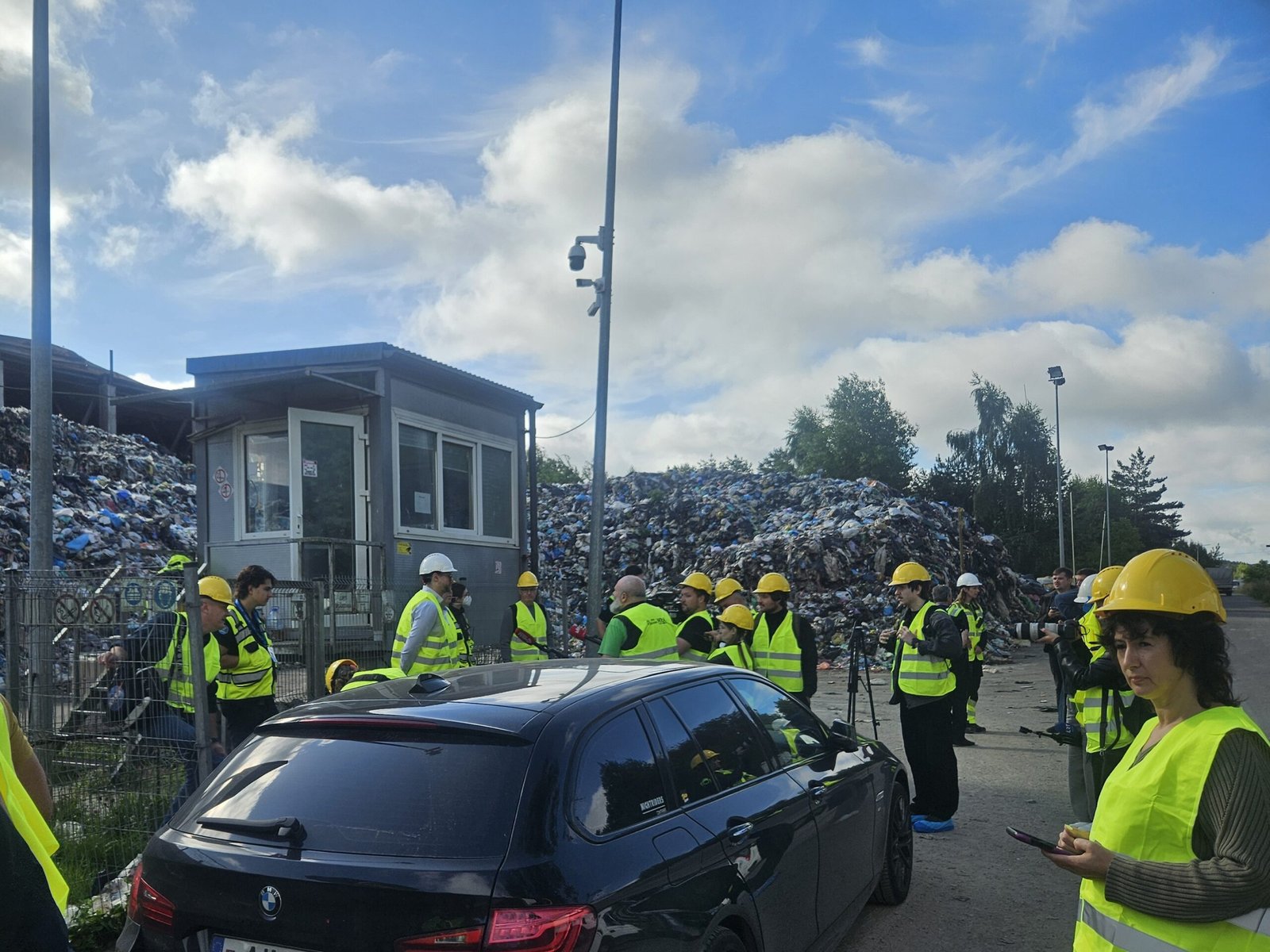
On Friday, the waste sorting facility was visited by Eglė Paužuolienė, Acting Director of the Environmental Protection Department. The parties discussed how to address the current situation in order to eliminate any risk to the environment.

https://www.youtube.com/shorts/LP6nGIQMdn8

Mayors refused to contribute back in winter

For almost a year and a half, Energesman has been processing waste in the fire-damaged facility, resulting in significantly higher operating costs. Over this period, the company has incurred EUR 4.2 million in additional expenses and necessary investments, which ultimately led to the accumulation of debt.

Using its own funds and the efforts of its employees, Energesman restored one of the facility’s three stationary sorting lines and erected a temporary shelter for employees working on waste sorting.

Throughout this period, the company has also been leasing additional mobile equipment used for sorting, shredding and baling waste. Energesman pays approximately EUR 100,000 per month from its own funds for the rental of this equipment.

In total, EUR 1.4 million (including VAT) has already been spent on leasing mobile equipment. These costs were fully financed by Energesman.

As the state of emergency continued for an extended period, Energesman asked VAATC, as the owner of the facility, to lease the equipment itself and provide it to the operator for use. However, this request was rejected.

The company also incurred approximately EUR 1 million (including VAT) in additional expenses while implementing various instructions issued by the Vilnius City Municipal Emergency Operations Centre (ESOC), including transporting waste to other regions, incinerating waste at more expensive facilities, and handling additional waste streams.

In addition, VAATC itself issued Energesman an invoice of EUR 300,000 (including VAT) for the temporary storage of 14,000 tonnes of unsorted waste at the Kazokiškės landfill. The decision to transport the waste to the landfill had likewise been made by the ESOC.

“Already in winter, we formally approached VAATC and the mayors of all eight municipalities, informing them that waste management costs had increased significantly following the fire. We invited VAATC and the mayors, as the owners of the facility, to allocate funds from their emergency reserves and assume at least part of these additional costs. However, they all refused. We were left to bear all the increased costs alone, despite the fact that the competent authorities confirmed that the fire was not caused by our actions,” emphasises A. Blazgys.

The mayors of the seven surrounding district municipalities stated that they could not allocate additional funding to a facility located outside their respective territories. Meanwhile, Vilnius Mayor Valdas Benkunskas refused on the grounds that the company does not own registered real estate in Vilnius, despite having allocated EUR 15,980 immediately after the fire.

VAATC refused to index the service fee

Under the plant operation agreement, the waste treatment fee that VAATC pays Energesman for waste management services is to be indexed annually to reflect increasing operating costs. This adjustment is to be made each year in March.

“As early as the winter of 2025, we approached VAATC requesting that the waste treatment fee be indexed by EUR 1.37 per tonne. We provided justification, pointing out that the minimum monthly wage had increased by 12 per cent since the beginning of the year. Nevertheless, VAATC refused to index the fee. As a result, throughout 2025, we lost EUR 330,000 in revenue, which would have been almost enough to pay the Vilnius cogeneration plant and prevent the debt from arising,” emphasises A. Blazgys.

Currently, VAATC pays Energesman EUR 53.81 per tonne (excluding VAT) for the treatment of mixed municipal waste and EUR 15 per tonne (excluding VAT) for food waste. This is the lowest waste treatment fee in Lithuania.

Operating at a loss while awaiting the reconstruction of the plant

The waste crisis in Vilnius will not be fully resolved until the fire-damaged waste sorting plant has been rebuilt, as mobile equipment cannot fully replace stationary sorting lines.

Only in May of this year did VAATC conclude a court-approved settlement agreement with Energesman, under which the parties agreed on the reconstruction of the plant building and the procurement of new equipment.

“Every process at VAATC took an extremely long time. A few years ago, the private sector managed to fully rebuild a waste treatment plant destroyed by fire within a year and a half. In contrast, VAATC spent an entire year merely agreeing on how the reconstruction would be carried out and how it would be financed. We made significant concessions to VAATC, assuming the majority of the investment costs for both the building and the new equipment, simply to move the process forward as quickly as possible. Every single working day spent operating in the fire-damaged facility meant financial losses for us,” says A. Blazgys.

Even before the settlement agreement was confirmed, in March this year, Energesman had already begun reconstructing the plant building. By now, new support columns and steel connecting beams have been installed. All that remains is to install the roof and wall cladding, which has already been manufactured and delivered to the plant site.

Energesman has already invested approximately EUR 1 million in rebuilding the plant building.

“We suspended the construction works in June after VAATC’s management changed and they stopped honouring the agreements that had been reached. However, all materials required to complete the reconstruction are ready, and the contractors could finish the work within one month. All that is needed is to clear the site and ensure funding for payment,” says A. Blazgys.

Public procurement launched for the new equipment

Energesman has already spent EUR 500,000 of its own funds on the initial orders for the new sorting equipment.

VAATC announced an international public procurement procedure for the acquisition of the new plant equipment (Procurement ID: 5728395). Three bidders submitted proposals. Energesman offered the lowest price of EUR 11.75 million. The second-lowest bid, amounting to EUR 15.55 million, was submitted by UAB Motecha together with Huttechnika sp. z o.o., while the third bid of EUR 15.74 million was submitted by UAB Azortum.

On 15 May this year, VAATC and Energesman signed the plant modernisation agreement. Under the agreement, VAATC undertook to transfer the first payment of EUR 4.4 million no later than 26 June. However, the payment was never made, and on 10 July, VAATC informed Energesman that it was terminating the agreement unilaterally.

“We have already completed 90 per cent of the plant design, paid advance payments to some of the equipment manufacturers, and carried out trials with the selected equipment, which we also had to finance from our own resources. We trusted VAATC, the law, and our democratic state to ensure that signed agreements would be honoured. It turns out that VAATC is above everything else – for some reason, neither contractual obligations nor the law seems to apply to them,” says A. Blazgys.

Preparations will have to start from scratch

The shortage of working capital was further aggravated by seasonality. During the heating season, significantly larger volumes of waste are sent for energy recovery, resulting in substantially higher payments to the Vilnius cogeneration plant. The company also generated less revenue from the sale of recyclable materials, as fewer materials could be recovered due to the fire-damaged equipment.

“Day after day, we were left alone to finance the increased day-to-day costs of waste management, invest in rebuilding the plant building and designing the new equipment. Throughout this entire period, waste generated in the Vilnius region continued to be treated. We did everything we possibly could to ensure that residents would not experience any inconvenience and that the plant could be rebuilt as quickly as possible,” says A. Blazgys.

All preparatory work had already been completed to enable a modern waste sorting plant to begin operating in Vilnius in March next year.

“All that was required was for VAATC to honour its contractual commitments, pay invoices on time or promptly approve our request to use factoring. It is difficult to understand why there is such unwavering belief that destroying everything will somehow lead to a better outcome. We do not live in a fairy tale – we live in reality. The work of the past year and a half will now have to start all over again,” notes A. Blazgys.

Last year, Energesman recorded a net loss of EUR 560,000, while the company’s revenue amounted to EUR 11.67 million. In previous years, the company had operated at a modest profit and therefore had no opportunity to accumulate a substantial financial reserve.

All profits generated by the company were reinvested in innovative solutions aimed at reducing the amount of waste disposed of at the Kazokiškės landfill. Even after the fire, less than 10 percent of non-recyclable waste was sent to landfill, although under the original agreement with VAATC the company was entitled to landfill up to 19 percent of waste. Following the reconstruction of the plant, the parties had agreed to reduce the share of waste sent to the Kazokiškės landfill to no more than 5 percent.